advice

This section brings together all the best practices from design to execution of efficient stainless steel bar stations. As every establishment has its own specifics, we share our knowledge and industry experience as bar designers and builders to help you better understand your project.

WHAT MATERIAL FOR A BAR COUNTER?

- Categories : Best practices

Although the bar counter is primarily determined by an aesthetic choice, it seems evident to us to address it here, as it concerns the longevity of the construction and the working comfort of the team members. Comfort is also related to adherence to ergonomic dimensions of the bar. The materials most commonly found on the bar top are tin, wood, stone, reconstituted stone, stainless steel, and brass. Below is a comparison of the different options.

The Zinc Bar Counter

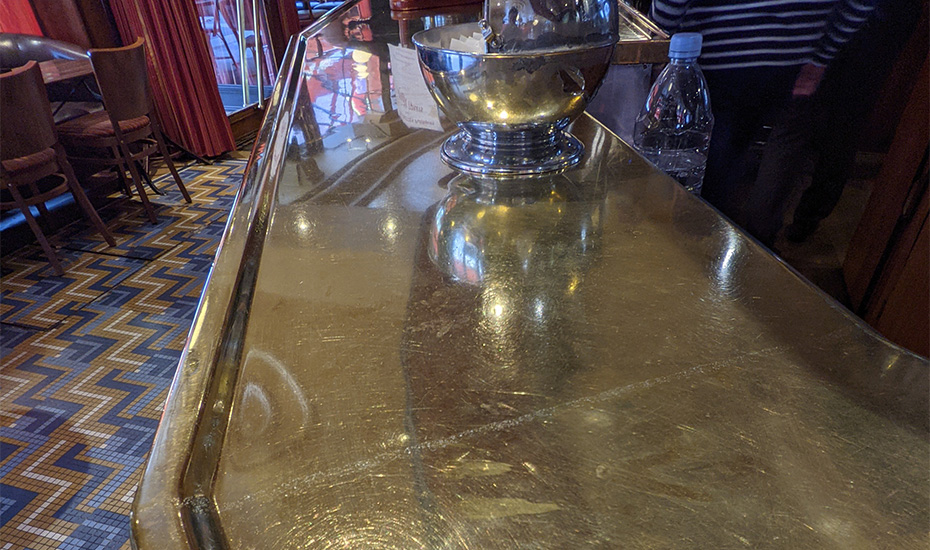
The zinc bar counter emerged in the first half of the 19th century. Made of laminated zinc, it was installed by zinc roofers on a wooden base. The folds and welds were done underneath to ensure perfect waterproofing and a correct visual appearance on the top of the counter. Shiny when new, it is sensitive to drinks and oxidizes at the slightest contact, taking on a spotted matte appearance. It requires daily maintenance. The term "zinc" as a reference to a bar counter has remained with us, even though zinc bars are very rare today.

The Tin Bar Counter

Arriving in the late first half of the 19th century, due to its ease of maintenance, the tin bar quickly replaced zinc countertops. The dominance of zinc on bar counters and the visual similarity between the two materials create confusion. When one talks about a zinc countertop, often tin countertops come to mind instead of zinc ones. The only common point with the use of zinc is that it requires a wooden support, often about 30 mm plywood, to be installed. All the work is done in the workshop from tin ingots that are melted into molds or sheets. The top is often treated with a thickness of 2 mm, and the edges are molded with patterns, then bent and welded onto the top. All the work is done in the workshop. The final assemblies to be done due to a countertop being too long or a post needing to be wrapped are welded on-site. The welds are then reworked to disappear completely.

The Stainless Steel Bar Counter

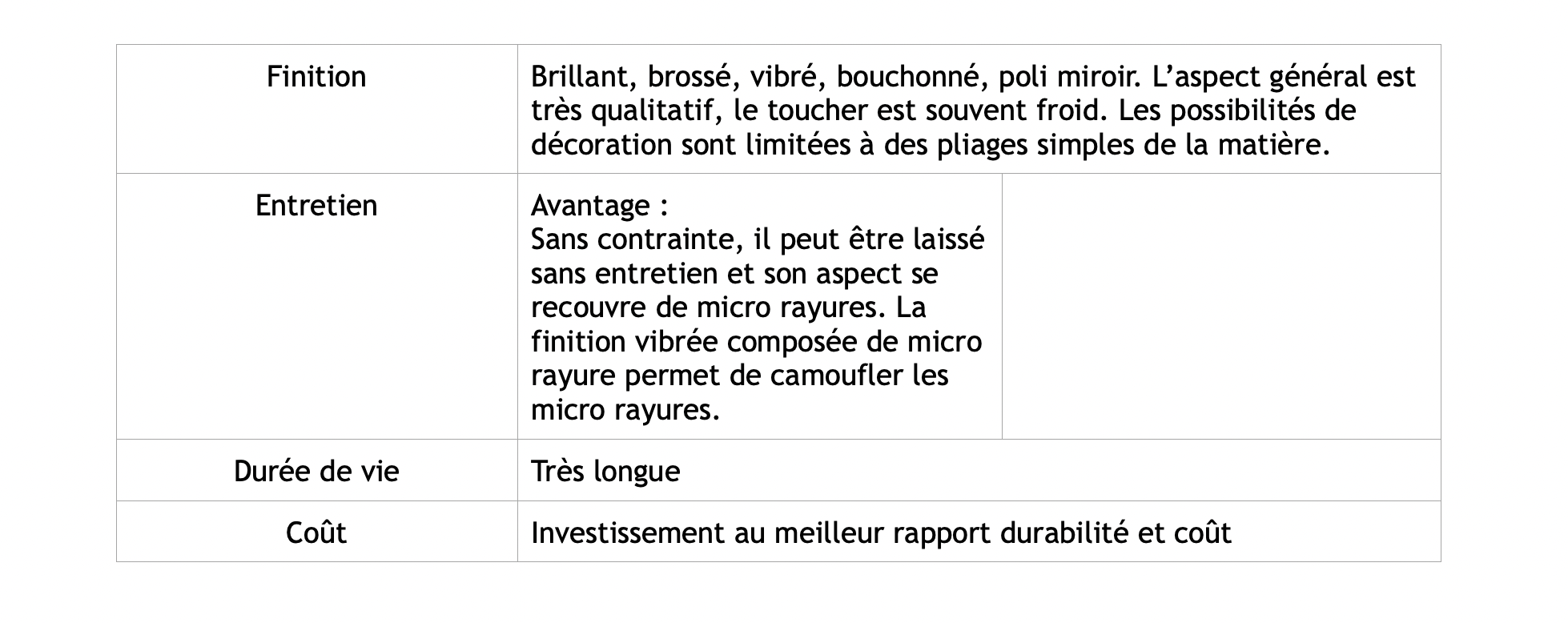
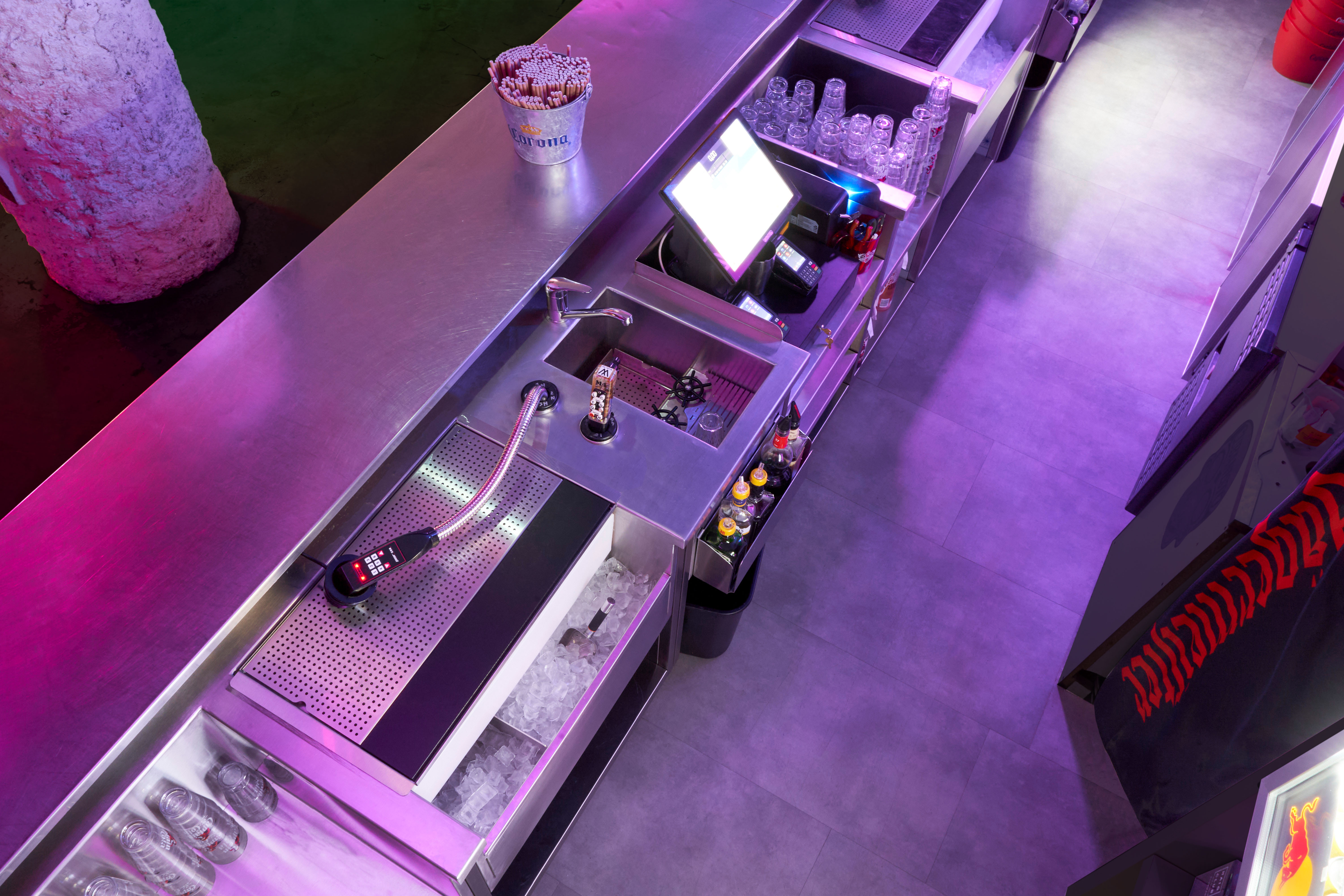
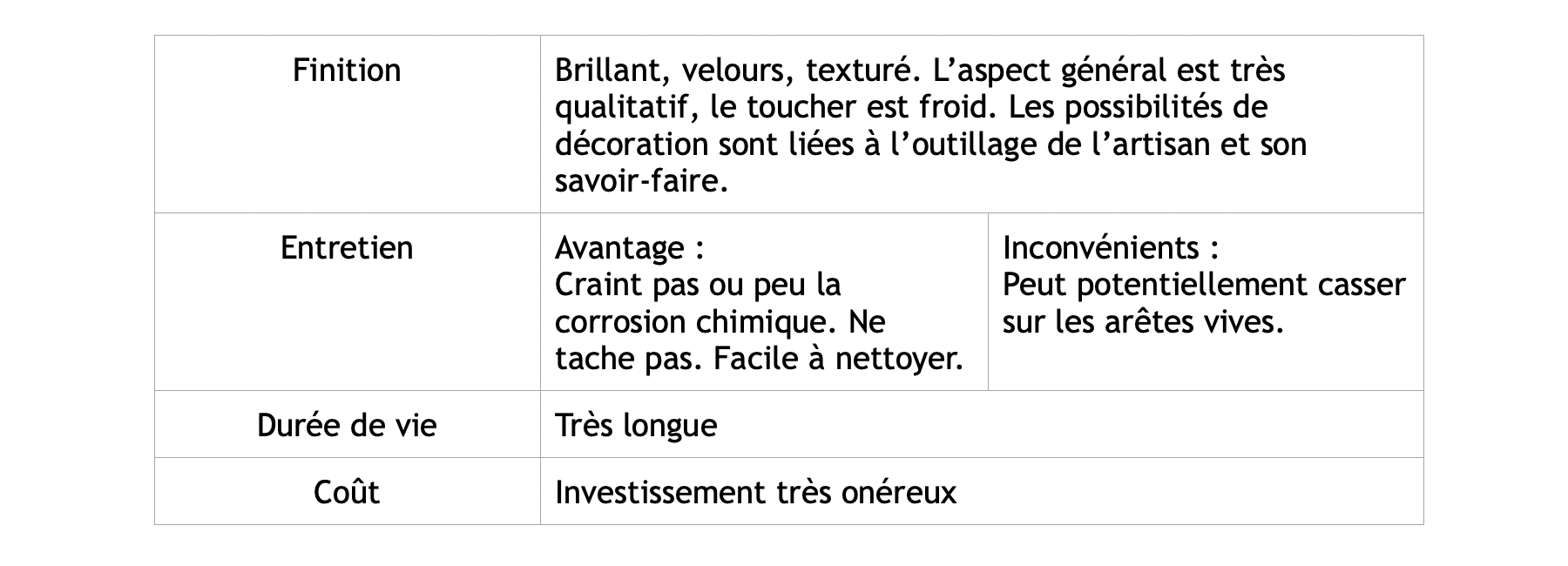
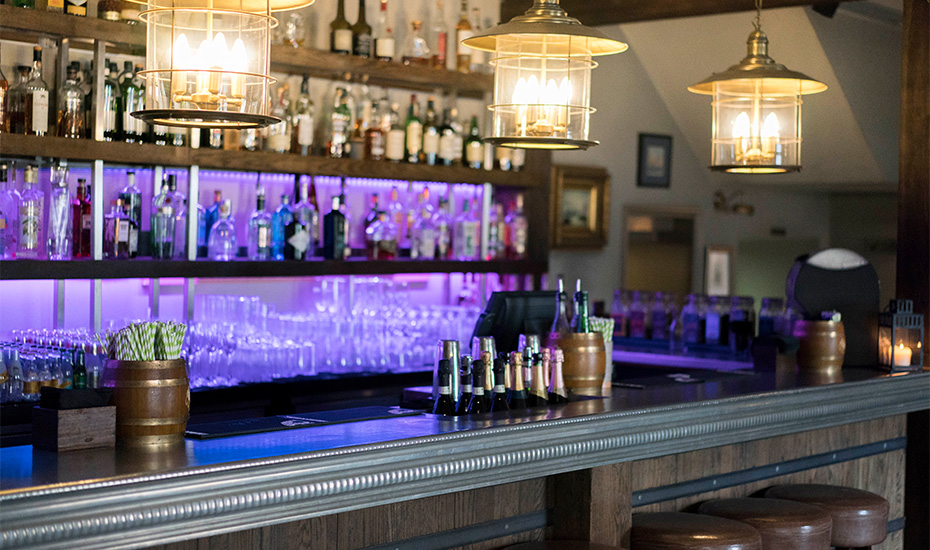
Appearing in the second half of the 19th century, stainless steel on bar surfaces helps reduce costs compared to pewter and requires no maintenance. The metalworker shapes stainless steel sheets by cutting and bending. Curved surfaces are possible but require more labor. The finish can be brushed, swirled, vibrated, grained, or mirror-polished. Since stainless steel is much harder than pewter, its finish tends to remain almost unchanged. Scratches do appear, but are much less deep than on pewter. The stainless steel counter can be made in the same workshop as the bar furniture, adhering to the dimensions of the counter.

Stainless steel bar counter

The Copper and Brass Bar Counter

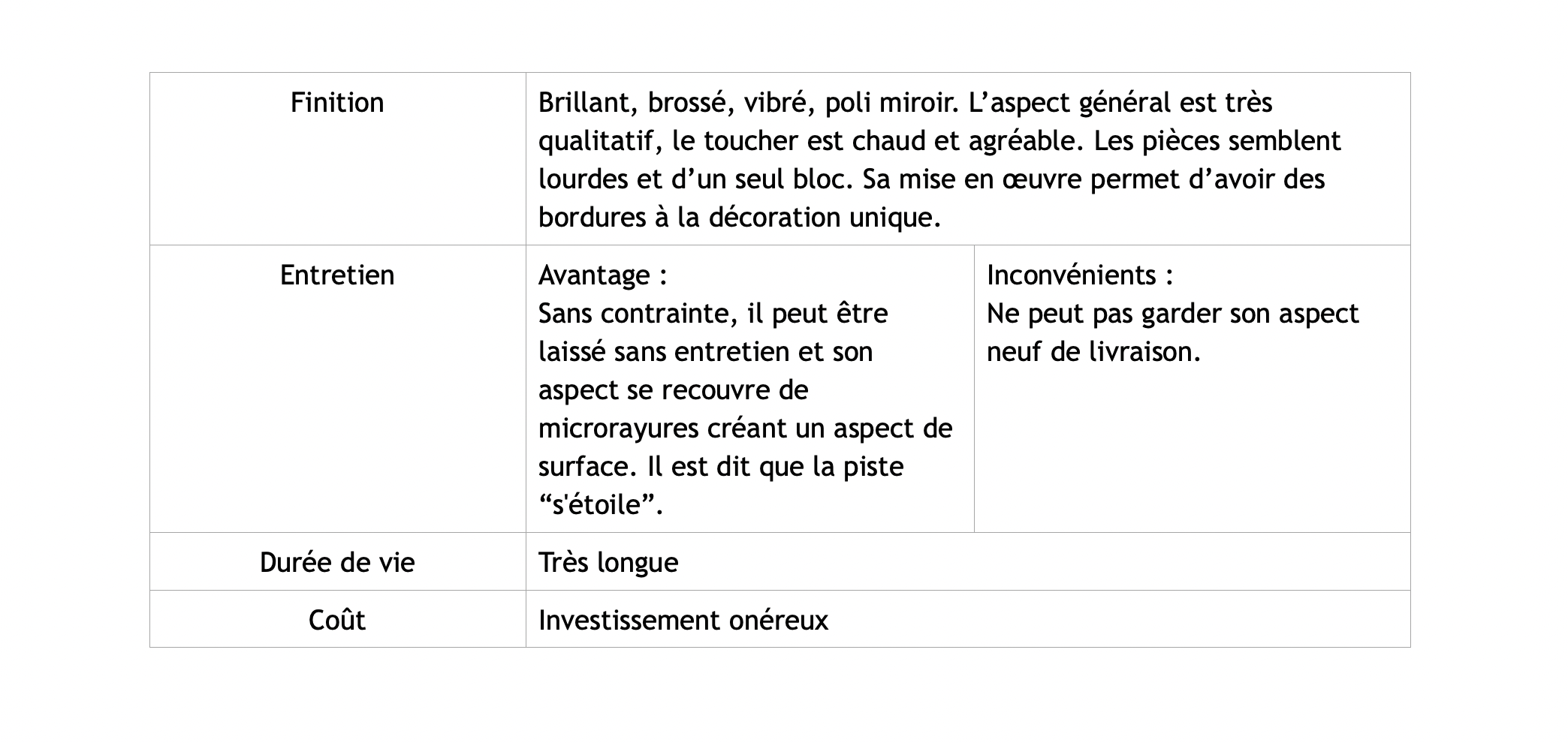
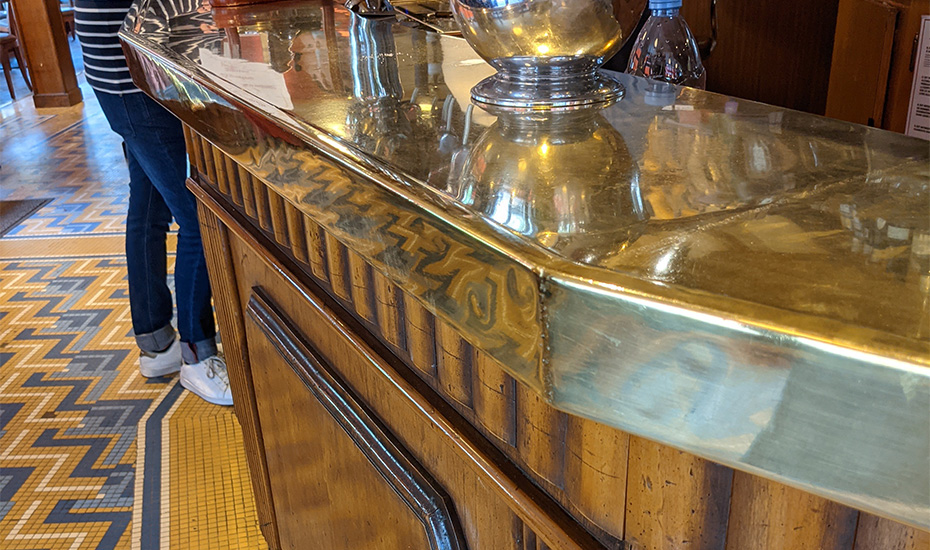
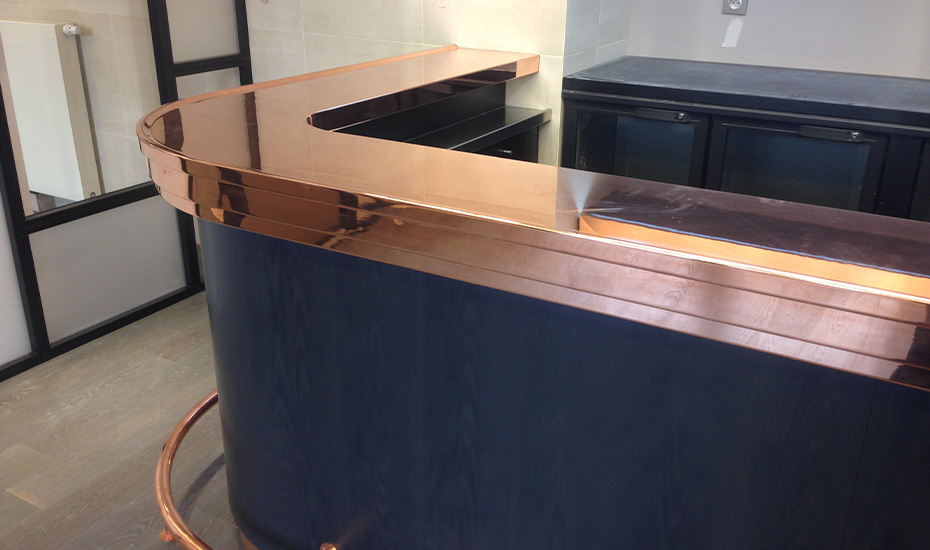
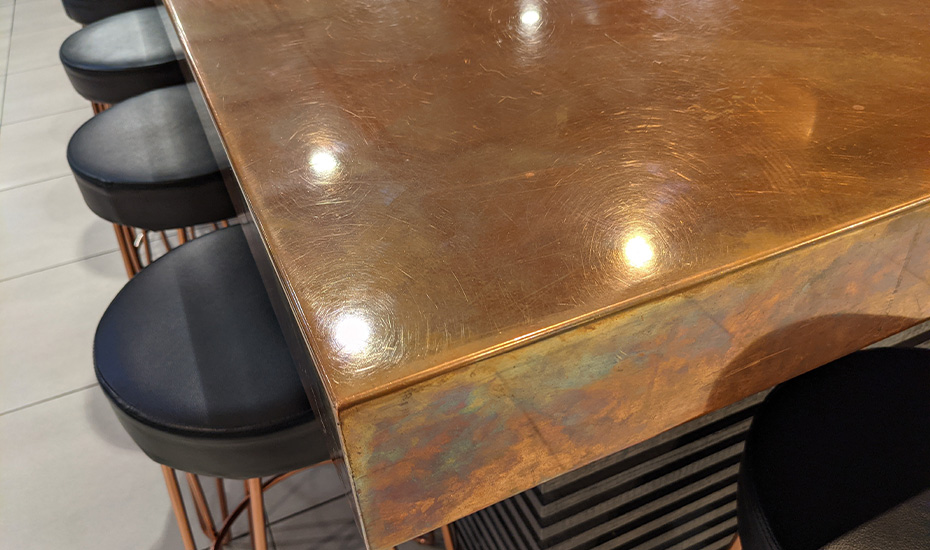
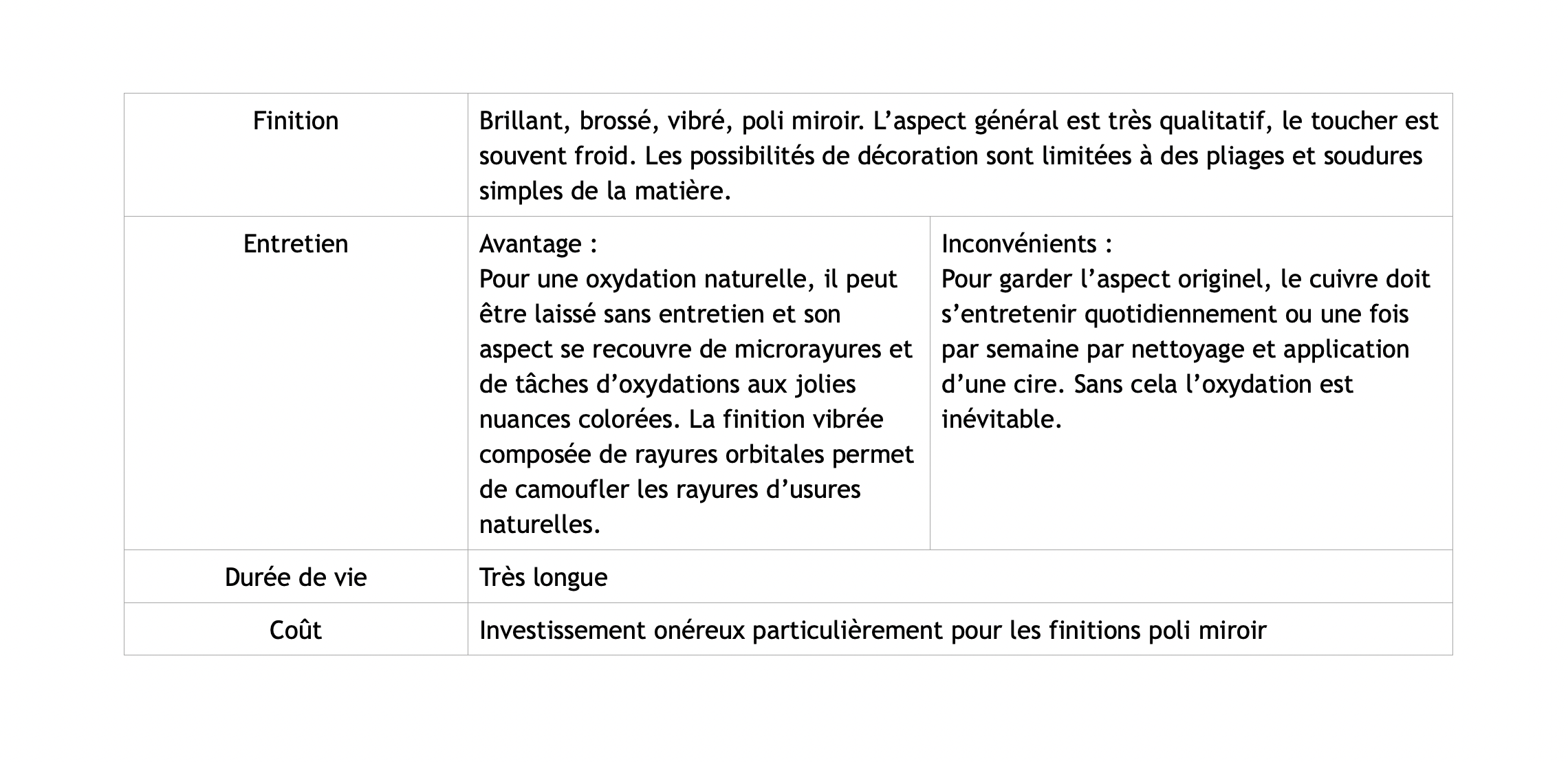
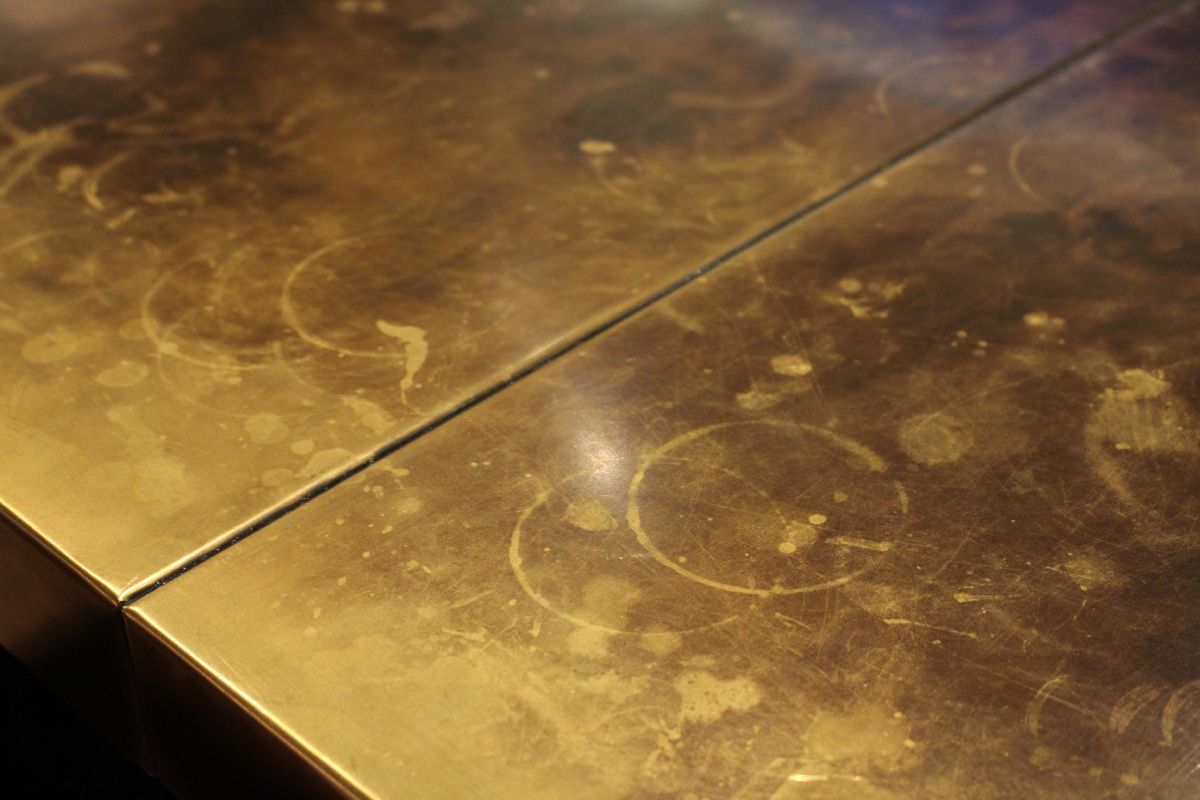
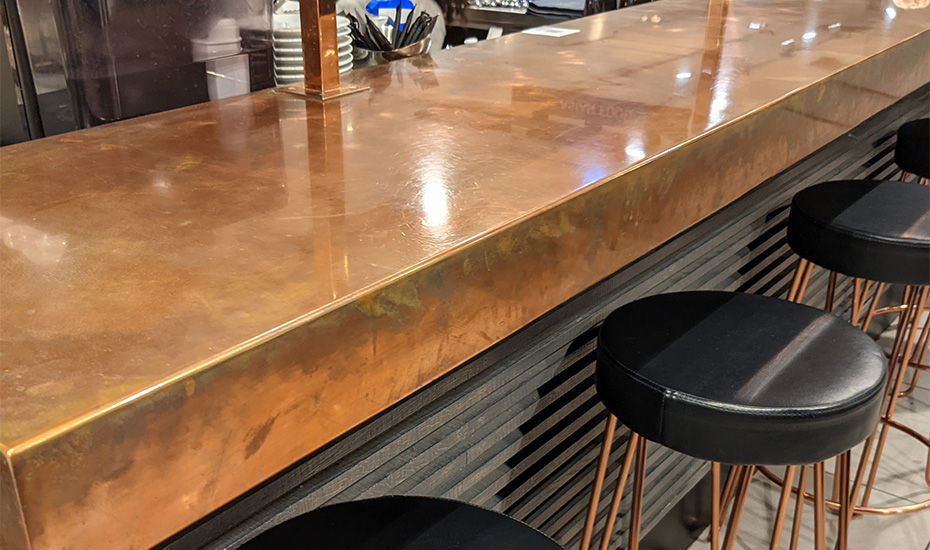
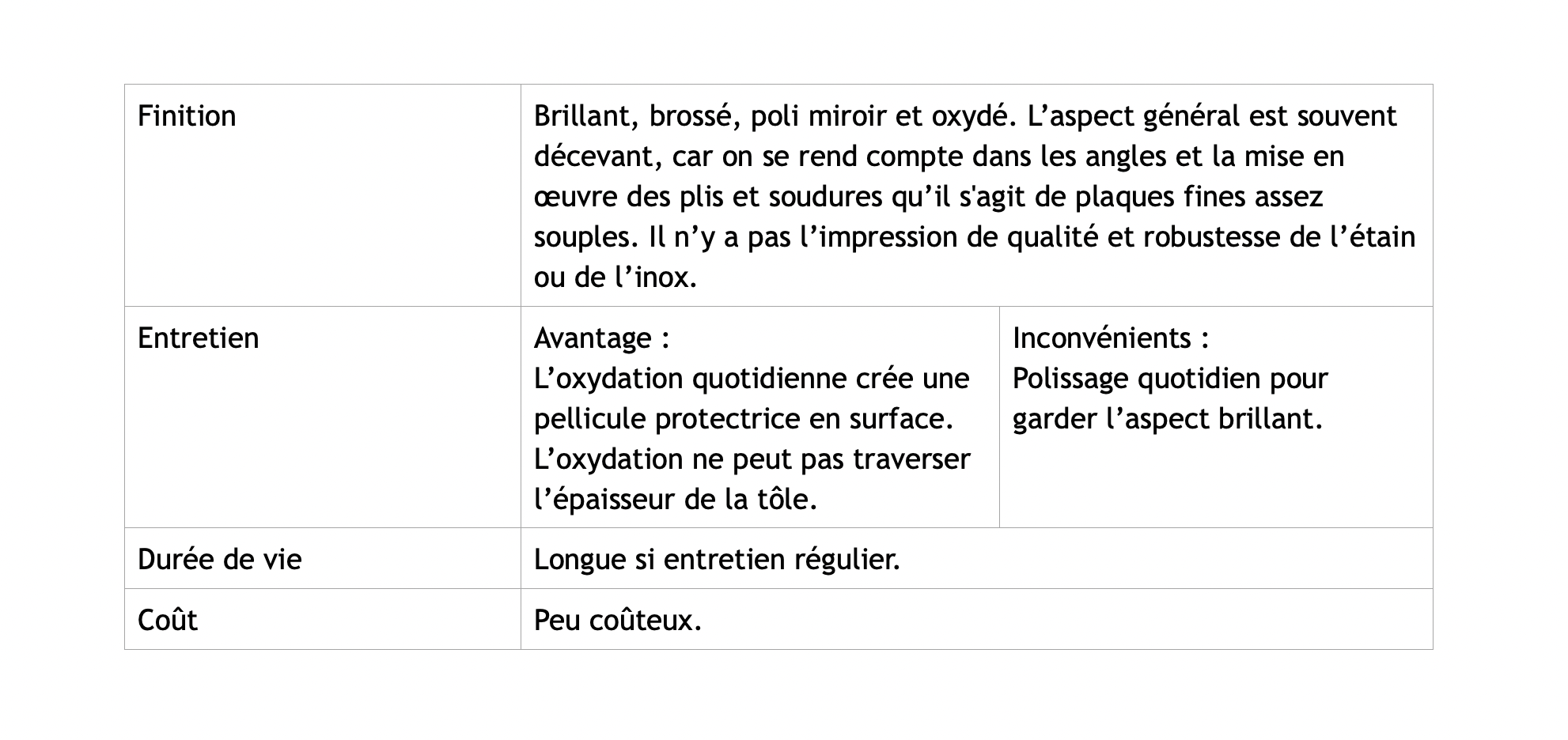
The copper and brass bar track remains a fairly specific request linked to aesthetic demand. Copper and brass are metals that can have beautiful finishes, but their oxidation is rapid and visible. It is important to carefully consider the maintenance constraints before choosing this finish. Just like brass, it is said that a copper or brass track is well-earned.

Maintenance Guide for a Copper or Brass Bar Counter with Natural Oxidation Finish:

Maintenance at the end of each service and monthly.

For a natural oxidized finish:

- Using a dusting broom or soft, dry cloths, clean the surface.

- Dry by wiping with a clean cloth to avoid streaking effects.

In the case of a natural oxidation finish, no product should be applied to the surface.

If a product is mistakenly applied, it is imperative to quickly rinse with clear water and dry with a clean cloth.

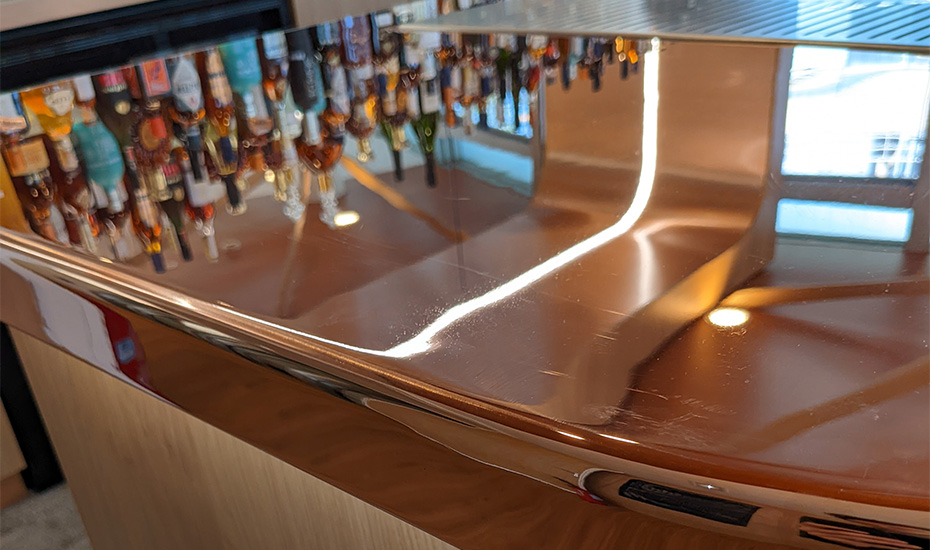
Maintenance Guide for Copper or Brass Bar Counter with Mirror Finish:

The full treatment protocol should be done every two weeks or once a month, or adjusted in frequency depending on usage and observed oxidation. Between each protocol, it is possible at the end of each use to apply a furniture wax with a dry cloth and apply it evenly.

To achieve a mirror finish:

- Make the surface to be treated clean and dust-free using a duster. Never use any products or water.

- Apply the copper maintenance product following the instructions. Spread the product with cotton wool or a white cotton cloth in small rosette circles as with an orbital sander, and focus on areas with stains.

- Let the maintenance product act and dry for a few minutes.

- Rub the treated piece with a polishing felt or a soft cotton cloth or flannel or non-abrasive wool cloth to bring out the product's full shine and natural luster. Use disposable gloves.

- As a final step, it is possible to use a surface wax to protect the copper from contact with oxygen. Apply the wax with a soft, dry cloth evenly.

Prohibited products and materials on copper.

In the case of a mirror finish, no product should be applied to the surface.

If a product has been applied by mistake, it is imperative to quickly rinse with clear water and dry with a clean cloth.
The Marble Bar Counter

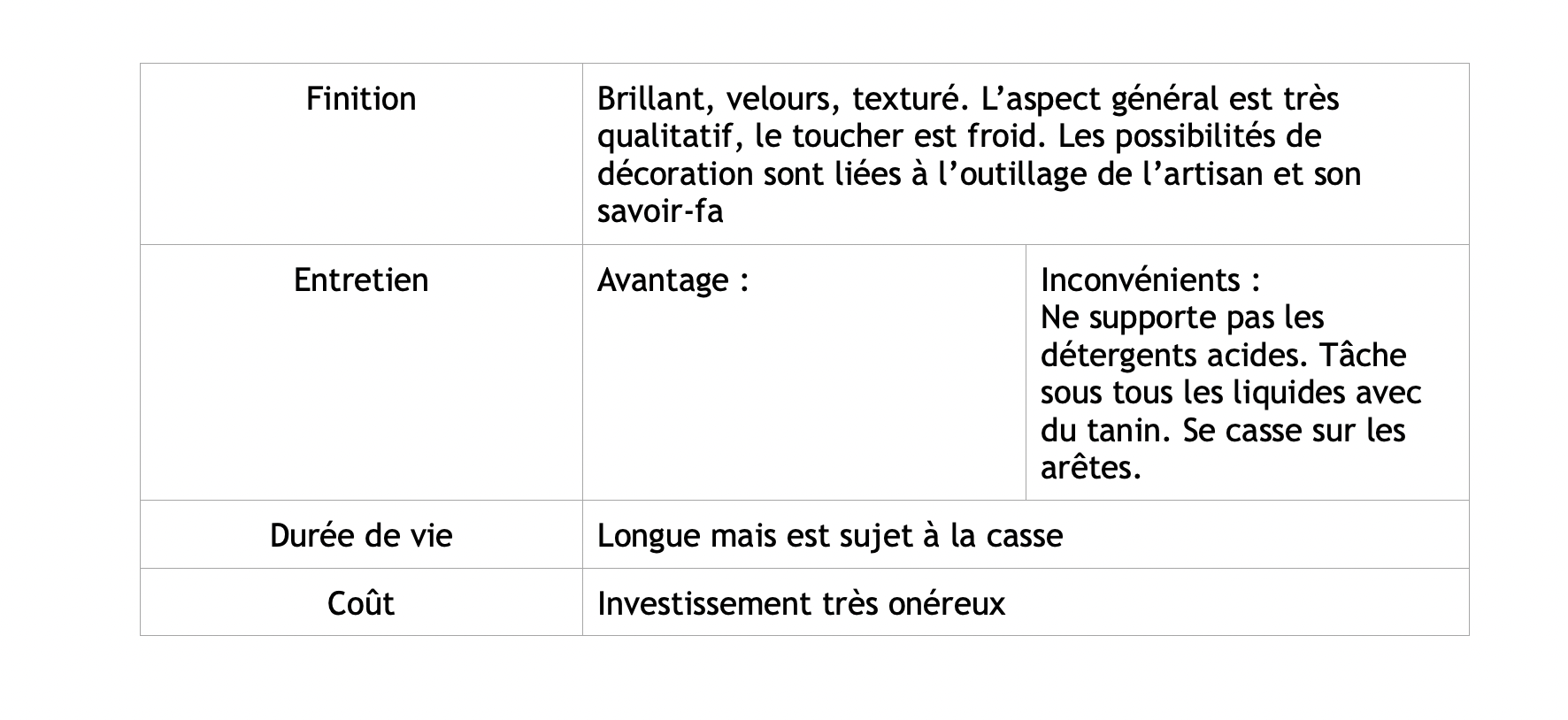
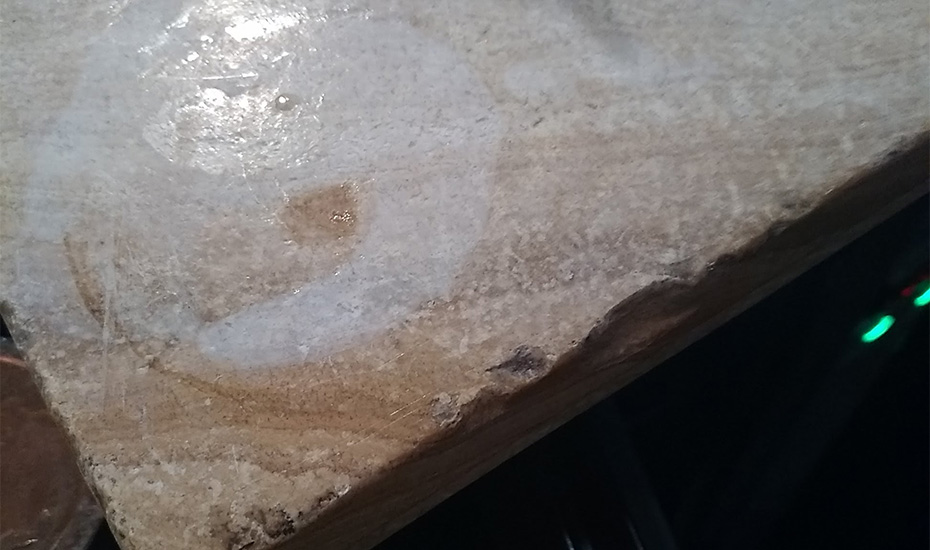
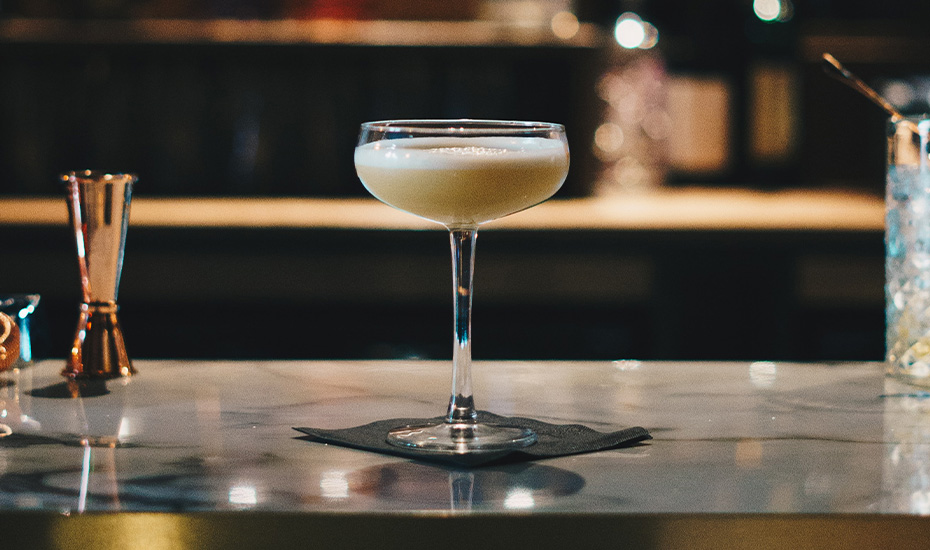
Because marble is, in the collective imagination, a noble material associated with the history of art, it is often requested for bar tops. This is the biggest mistake an establishment can make. The main error is confusing marble with quartz, which has distinctly different qualities. A marble bar top is mechanically very fragile, the edges break easily, and it is also porous. It therefore becomes permanently stained with wine tannins or coffee marks. It should be avoided for a beverage service counter. This is because it is a rock derived from limestone and mainly composed of calcite crystals.

It is preferable to opt for quartz, which is visually very similar but has remarkable mechanical properties.

The Quartz Bar Counter

Quartz is the ideal choice for creating a stone bar. Unlike marble, it does not stain and is much more durable. While marble is composed of porous and less resistant limestone derivatives, quartz is made of much harder silicon dioxide with a waterproof finish. There is an infinite variety of natural patterns available, some very similar to marble. It is the ideal choice for creating a stone bar top. To create a stone surface, it's important to work with a stone mason who can help you discover and choose from a selection of stone slabs with diverse origins and rich patterns.

To prevent premature wear on the edges, it is possible to apply a metal edge band. This creates a neat visual finish while protecting the edges. This method is called edging for tables.

The solid wood bar counter

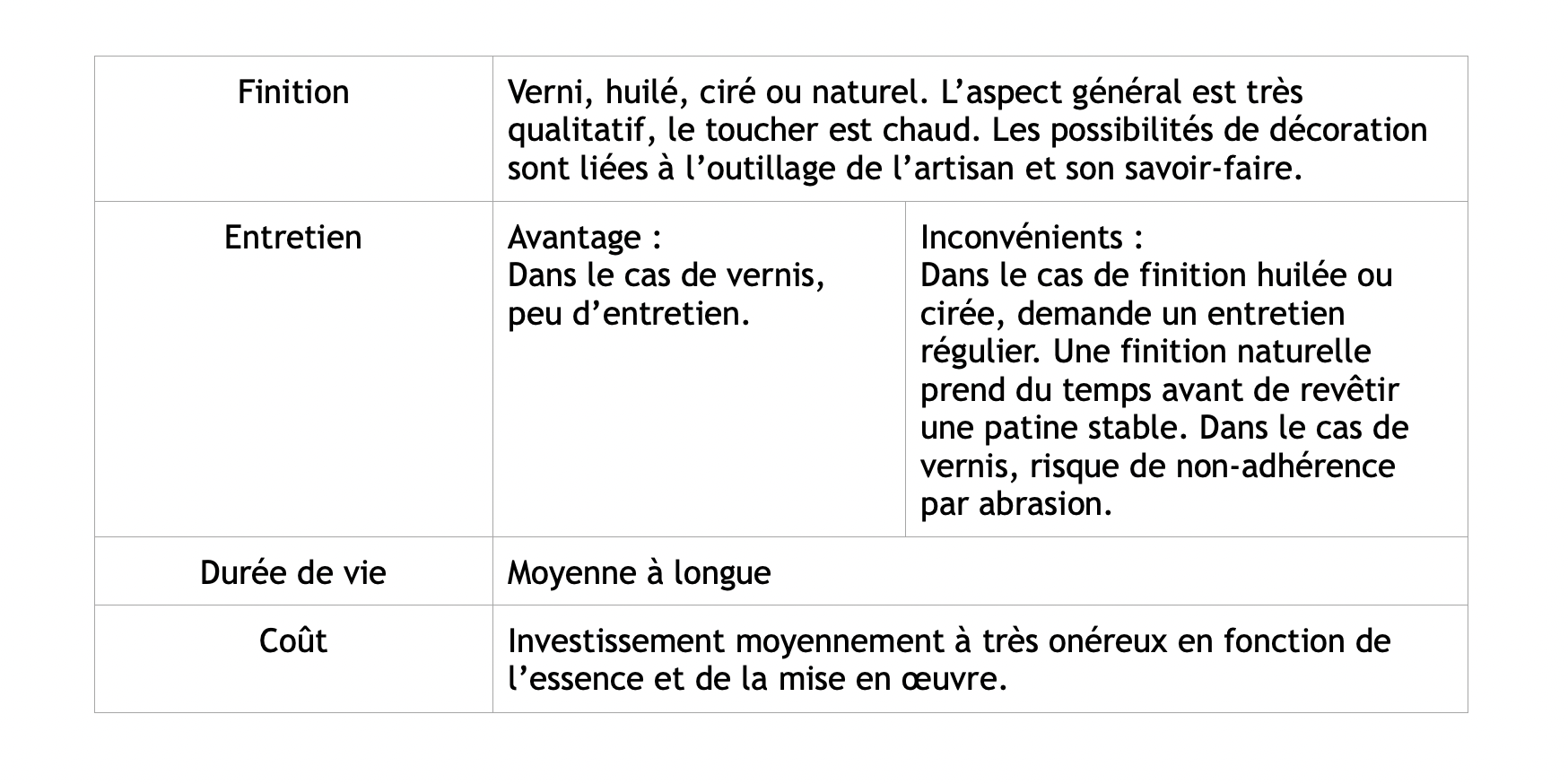
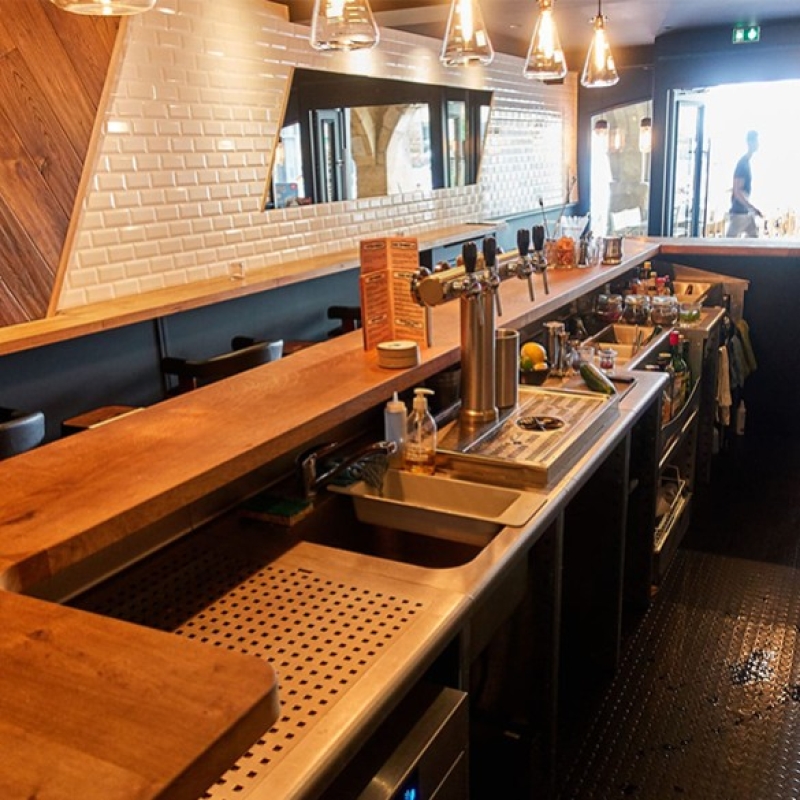
A wooden bar can be very beautiful and develop a lovely patina over time. It is important to choose a wood species that is resistant to constant contact with water. These are often exotic species. It is not recommended to apply a varnish-type surface treatment, as repeated impacts prevent the varnish from lasting over time. It is preferable to treat the wood with a wax that makes it water-repellent. Woods are classified from 1 to 5 according to the NF EN 335 standard, mainly based on their water resistance. For bar use, it is advisable to choose a class 4 or 5 wood species. You should also verify its hardness to ensure it maintains its surface appearance over time. Recommended species include ipe, doussie, merbau, jatoba, moabi, padouk, azobe, and iroko. Softwood species like pine, fir, and larch should be avoided due to their low hardness. However, all the species proposed here come from Brazil, East Asia, or Central Africa. To follow a CSR approach, it is preferable to opt for a local and abundant species. European oaks are a good alternative.

Wooden bar counter

We believe that there are no materials that meet all the requirements of durability, aesthetics, hygiene, and ease of maintenance. But as you can see, the choice depends primarily on the context of use.

You may also be interested in these other tips