advice

This section brings together all the best practices from design to execution of efficient stainless steel bar stations. As every establishment has its own specifics, we share our knowledge and industry experience as bar designers and builders to help you better understand your project.

THE CONNECTIONS FOR THE BAR'S SUPPLIES AND DRAINS

- Categories : Best practices

The supply and drainage network of the bar is very similar to that of a professional kitchen. Even though gas is not distributed at the bar, the requirements are still not simple. Unlike a professional kitchen installed in a tiled room with no real aesthetic attention, the bar is arranged in a space constrained by bar furniture and must maintain a decorative or at least discreet appearance in a space that is often very limited. The dimensions of the bar are standardized to make it an ergonomic space.

The technical requirements of the bar offer a complexity in design and installation because:

- The narrowness of the space between the equipment and the back of the furniture requires careful design of the furniture and equipment layout.

- The technical constraints of certain machines (drainage or air circulation) require solutions with little room for error.

- Sealing constraints must be respected just as in a kitchen.

- The greatest complexity comes from the gravitational wastewater drainage. The slope of the drain pipe must be 2 cm per meter.

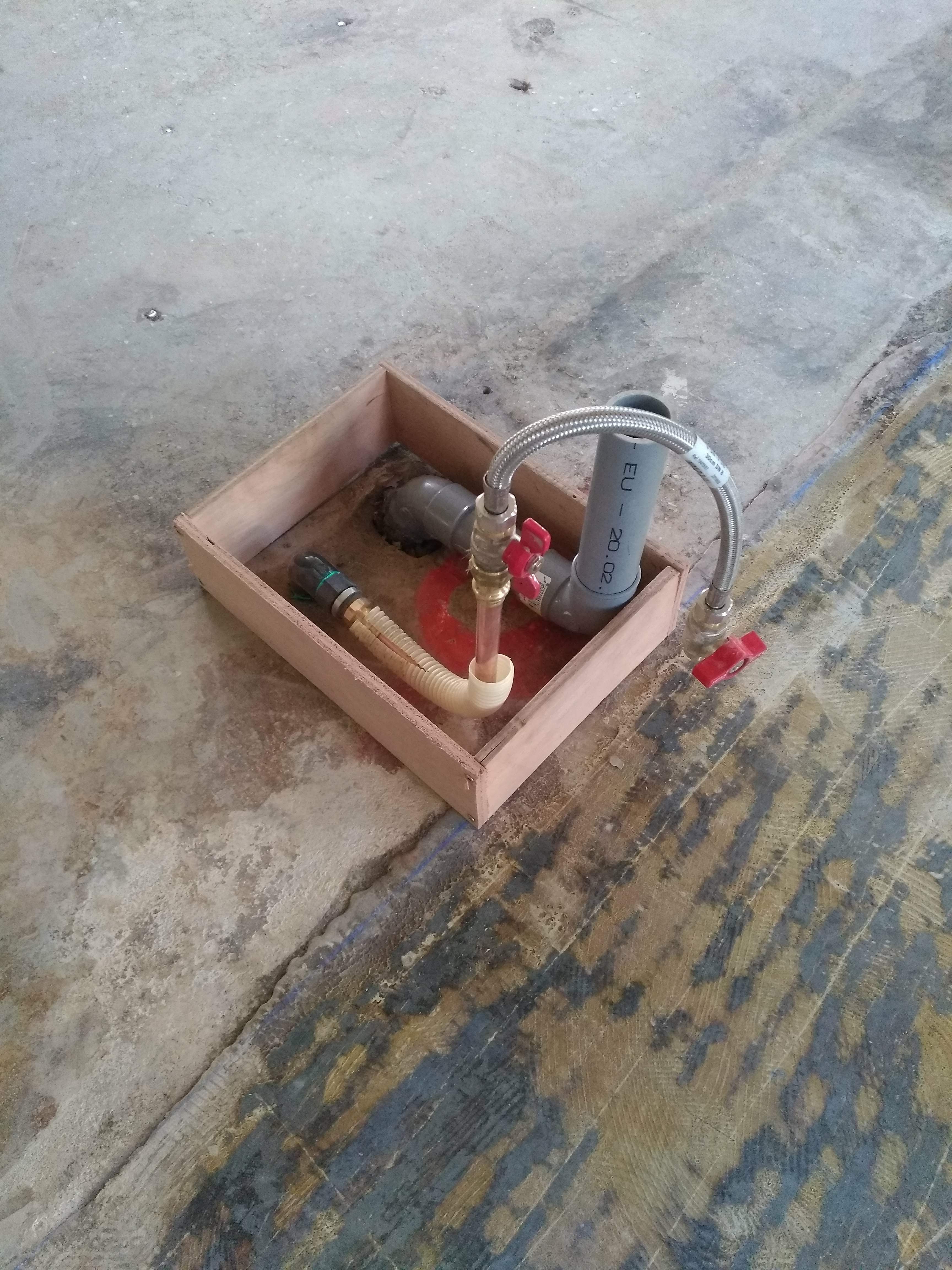
The supply generally arrives at a point in the bar through the floor, either directly from the basement or the solid slab, or distributed under a technical floor. Once the counter is assembled, it provides support for distributing the networks before installing the layout.

Plumbing in the context of bar layout

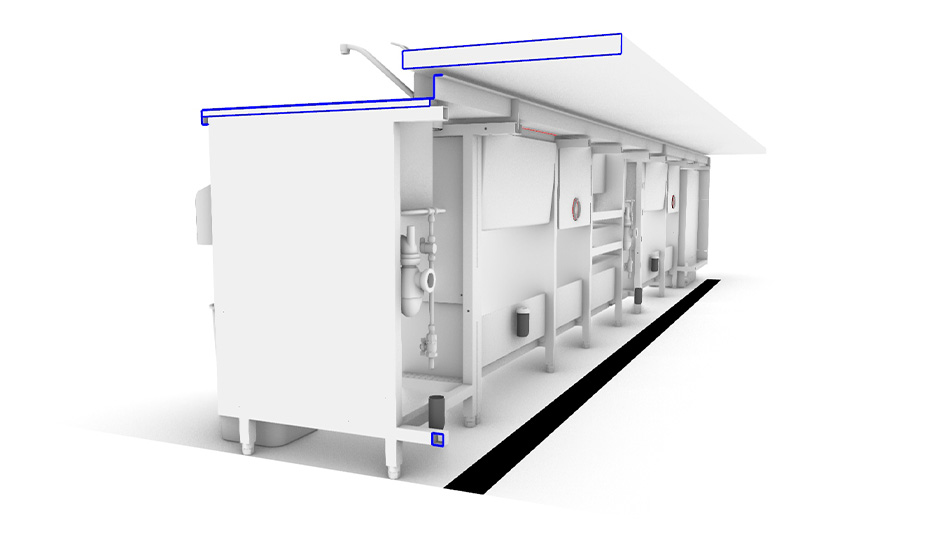
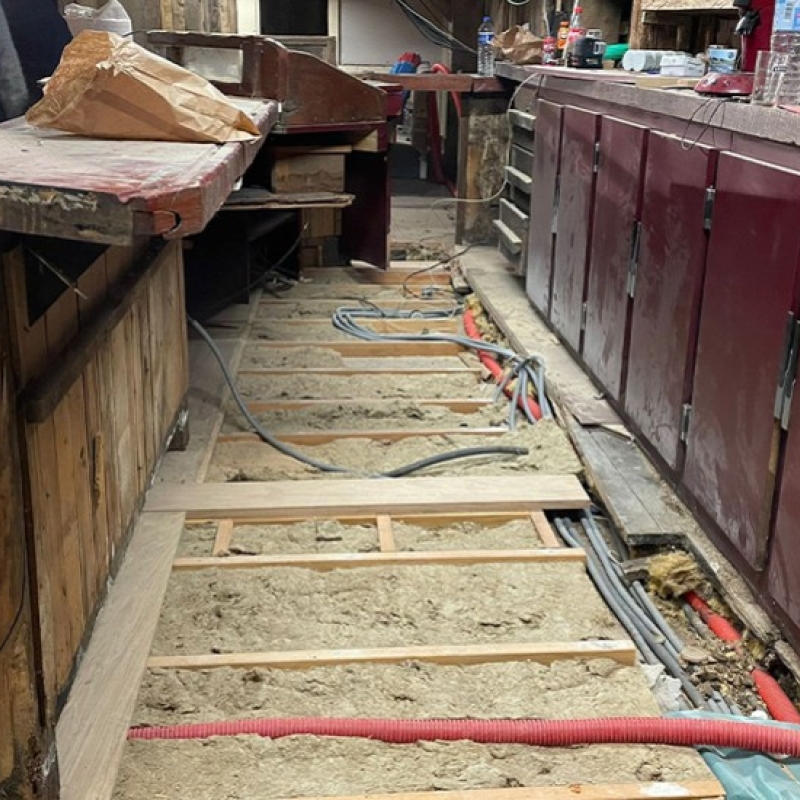
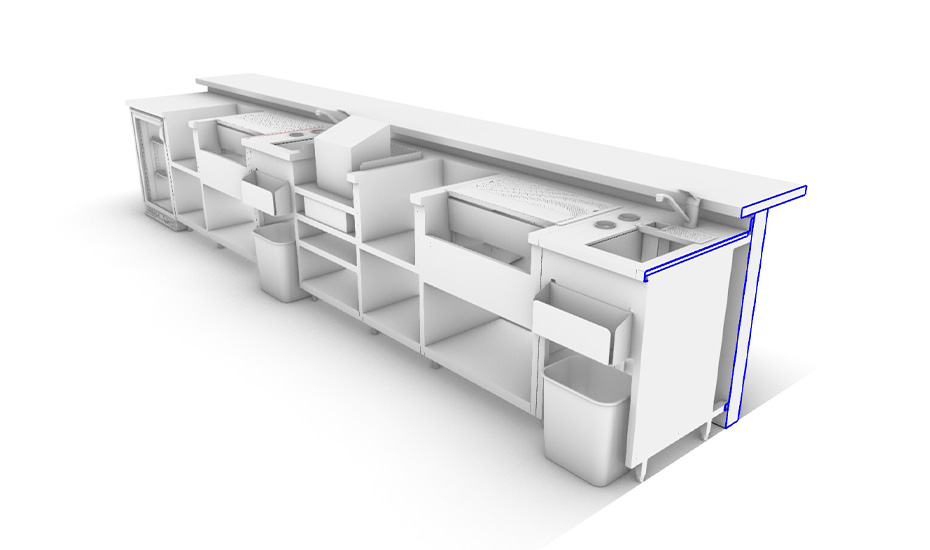
Generally, a technical space of 8 to 12 cm is left at the back of the bar furniture. Sometimes, there are passage holes in the vertical uprights of the bar's carpentry arrangement that serve as circulation for the connections. These include cold water, softened cold water, osmosis-treated cold water, chilled water network, hot water, refrigerant gas, drainage, wastewater, and single-phase and three-phase electrical supplies. This large number of supplies in such a small space in the bar's technical areas requires precise implementation.

For all these requirements, it is advised to:

- In anticipation of future troubleshooting or maintenance operations, the electrical or fluid supplies should never be behind the equipment, but always positioned so they can be easily accessed without having to remove the equipment to reach them.

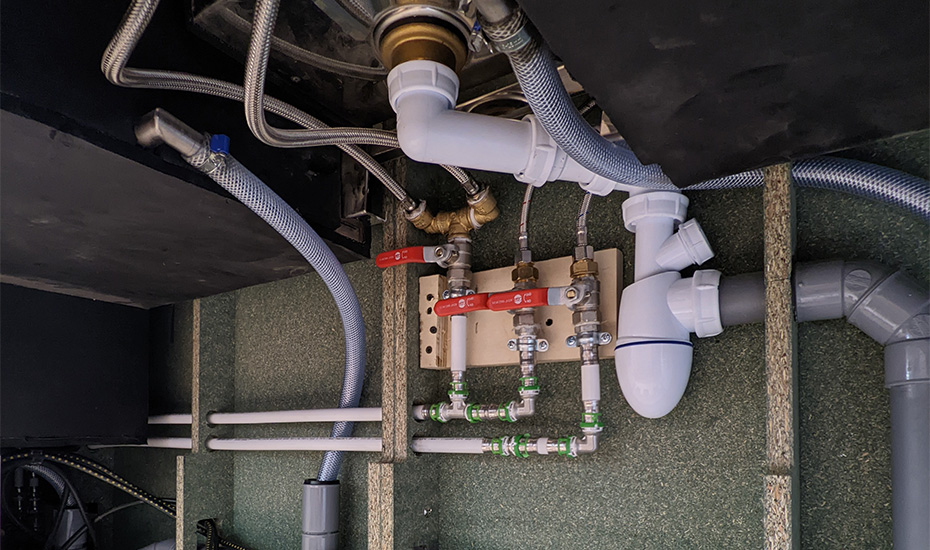
- A dedicated shut-off valve or a dedicated outlet with a line to the electrical panel for each piece of equipment. In case of a malfunction, the equipment can be easily unplugged without affecting other equipment at the bar. For example, if the cold water supply only has a general shut-off valve at the bar, if a faucet leak occurs, you would need to shut off the entire supply to all stations.

- In the service void, run electrical lines at the top, gas lines in the middle, and plumbing at the bottom.

- Prefer an installation where all the connections are fixed to the front layout.

- The installation of an accessible main siphon.

Plumbing in the context of bar layout

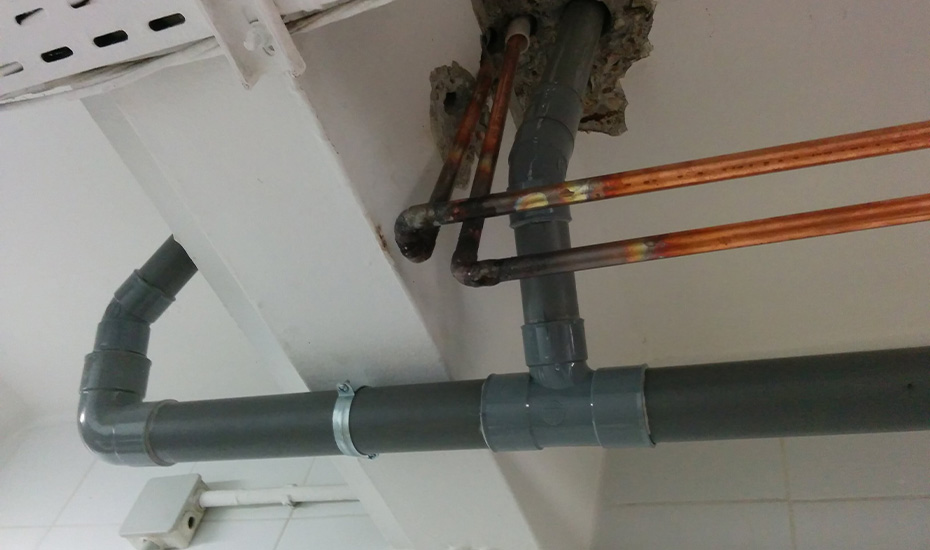
In this photo, we see a supply system installed beneath the bar, directly passing through the basement slab. This technique allows for easy interventions in case of problems and makes it easy to install a pathway siphon under the bar.

The most common plumbing networks are:

- Cold water: male outlets 12/17 for mixers, male 15/21 for glass rinsers, male to the bar 20/27 for ice machines, and according to the technical specifications for the equipment.

- Hot water: male outlets 12/17 for mixers.

- Softened cold water: outlets for equipment such as glass washers. Diameter according to the machine's technical specifications.

- Chilled water: in newly constructed establishments with generally an air conditioning system, a closed-circuit chilled water network can be used to operate the cooling units of certain equipment.

- Refrigerant gas: from the cooling units, copper strands with thermal insulation supply the remote refrigeration units.

How to avoid sewer odors at the bar?

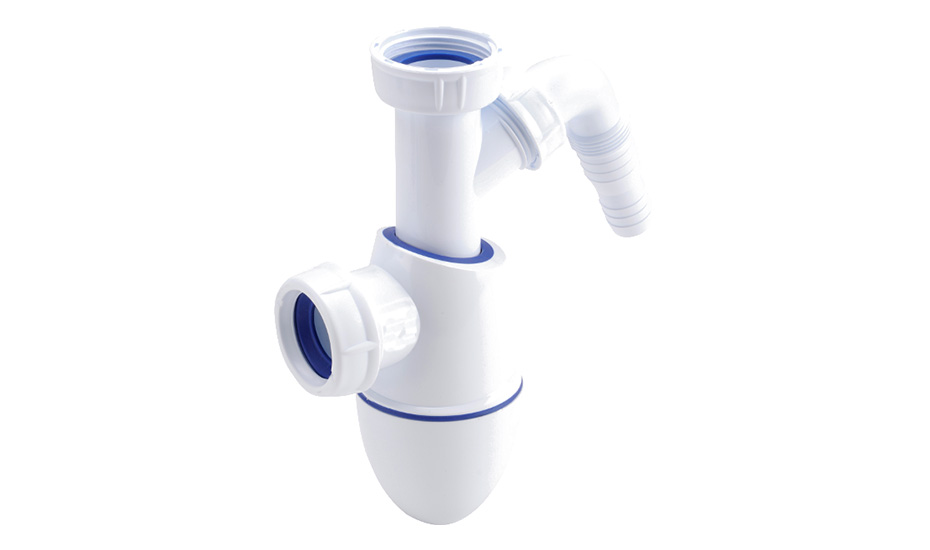
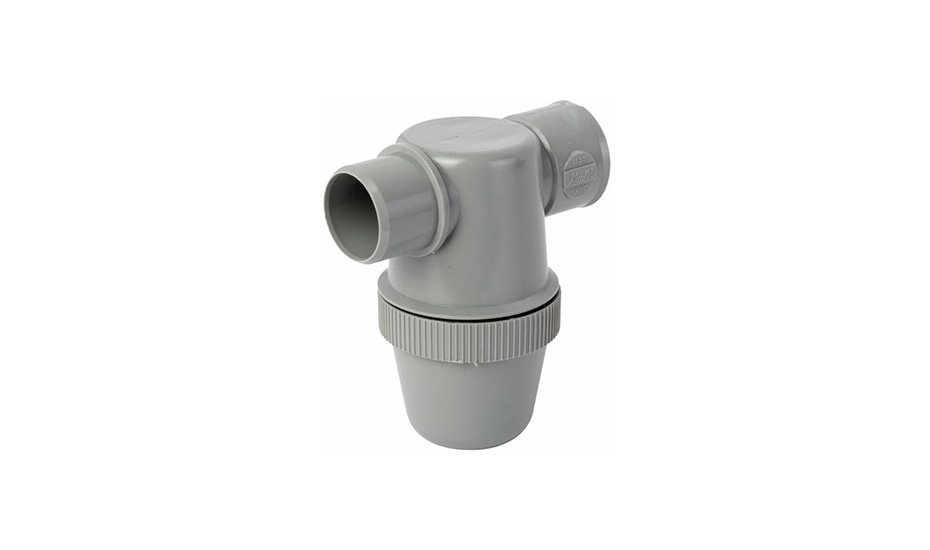
One of the common problems in bars is the rise of odors from wastewater. This is due to improper implementation of wastewater drainage. To avoid this problem, each piece of equipment with drainage should have its own independent siphon. If this is not possible, a siphon should be installed on the main column. For a main column, a diameter of 60 mm is ideal, and a diameter of 40 mm for distribution. It is also possible to install a pathway siphon at the lowest point of the installation.
It is preferable to use plastic under-sink traps rather than brass ones, even if they are less sturdy. When using the bar, it often happens that bins, crates, and other objects stored under the bar are handled vigorously. Sometimes this breaks the drains. It is better for the trap to break rather than the PVC drainpipe, as it is much easier to repair.

The most common electrical networks:

- Single-phase 240V+N+E of different power levels depending on the equipment, it also powers comfort outlets.

- Single-phase 240V+N+E with UPS mainly to power the registers to avoid any disruption of orders and payments in the event of a power outage.

- Three-phase 400V+N+E with power from 3 KW to 12 KW, it powers glasswashers for faster washing cycles than single-phase.

Low-voltage currents:

- RJ45 is mainly distributed at the bar for POS cash register systems.

The major constraint for distributing the bar's networks is the standardized implementation of sealing. This sealing, in case of a leak, minimizes damage through containment and legally ensures coverage by insurance. The issue of sealing is therefore crucial in the process of creating a bar. Allowing the installation of networks, the bar space plan, and the bar construction technique, it intervenes very early in the creation of an establishment. This requires having an advanced bar program at the beginning of the project.

The main issue at the bar is not managing the water supply, but primarily the drainage of wastewater. The drainage is done by gravity, and alternative solutions like lift pumps are not viable for the daily and professional use of a bar. Therefore, the location and layout of the bar must be planned based on possible solutions offered by the building and its potential for modifying the plumbing layout.

To achieve the distribution of plumbing at the bar, several solutions are possible:

- Run the networks along and through the partitions.

- Go through the basement to come up under the bar.

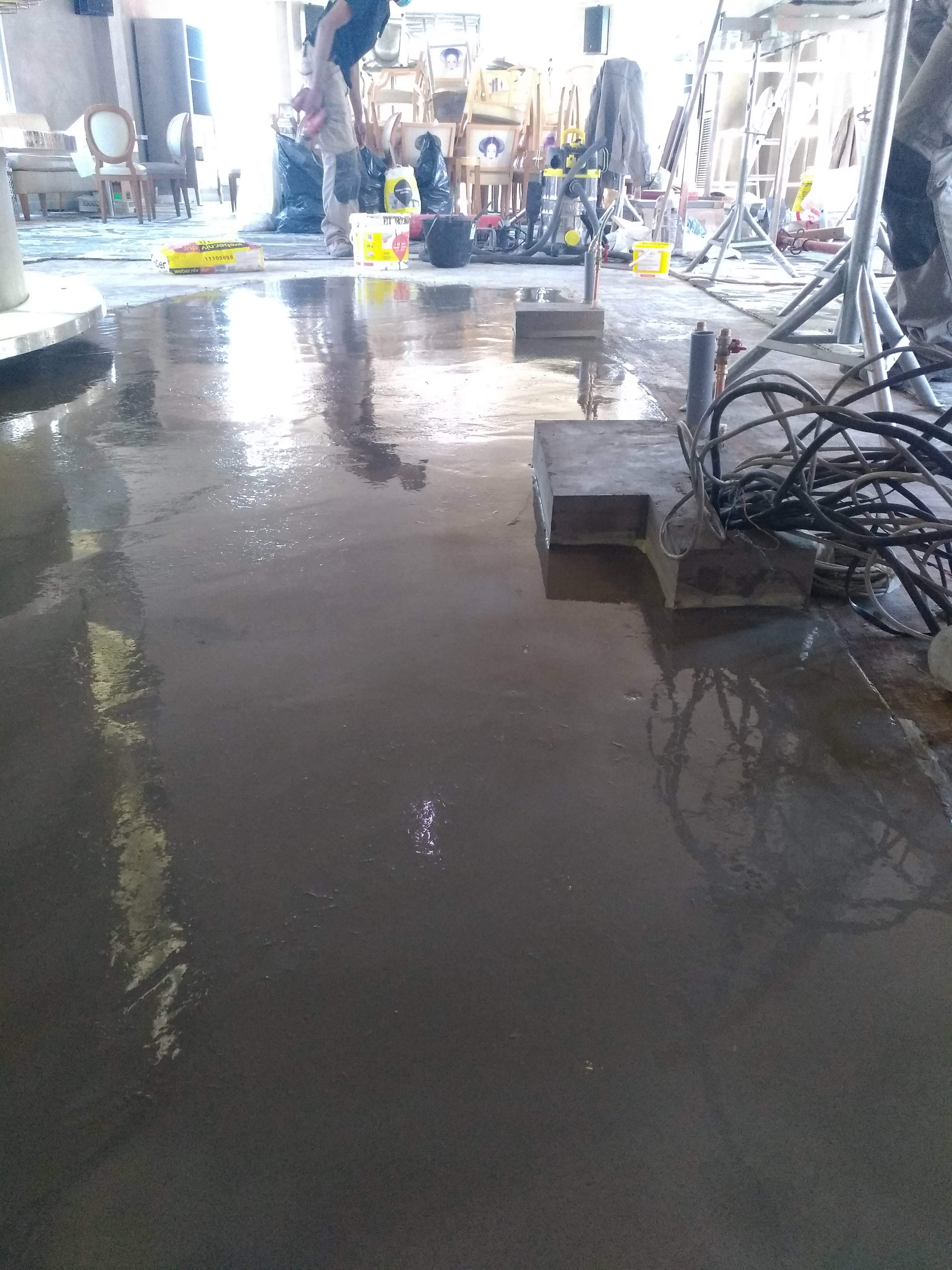
- Include the networks in the floor slab.

- Build a technical floor to distribute throughout the bar.

You may also be interested in these other tips