advice

This section brings together all the best practices from design to execution of efficient stainless steel bar stations. As every establishment has its own specifics, we share our knowledge and industry experience as bar designers and builders to help you better understand your project.

Beverage service strategy in food court, food market, and food hall

- Categories : Best practices

In the field of bars, as a designer, food courts push us to demonstrate ingenuity and cleverness in order to create high-performance bar stations with smooth usage, both for the production team and for the service experience perceived by the customer.

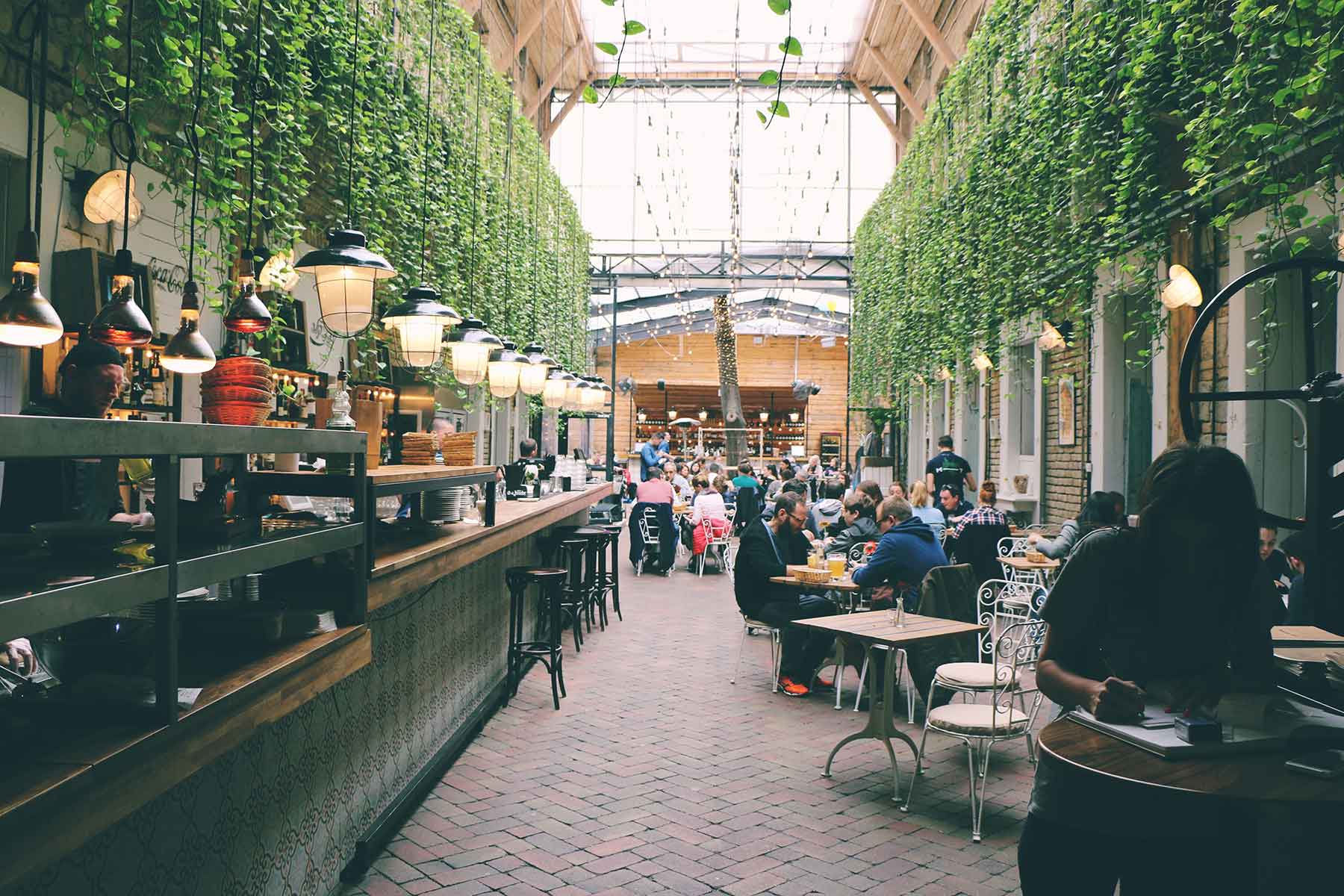
food court decoration

From Food Court to Food Hall, an Ever-evolving Offer

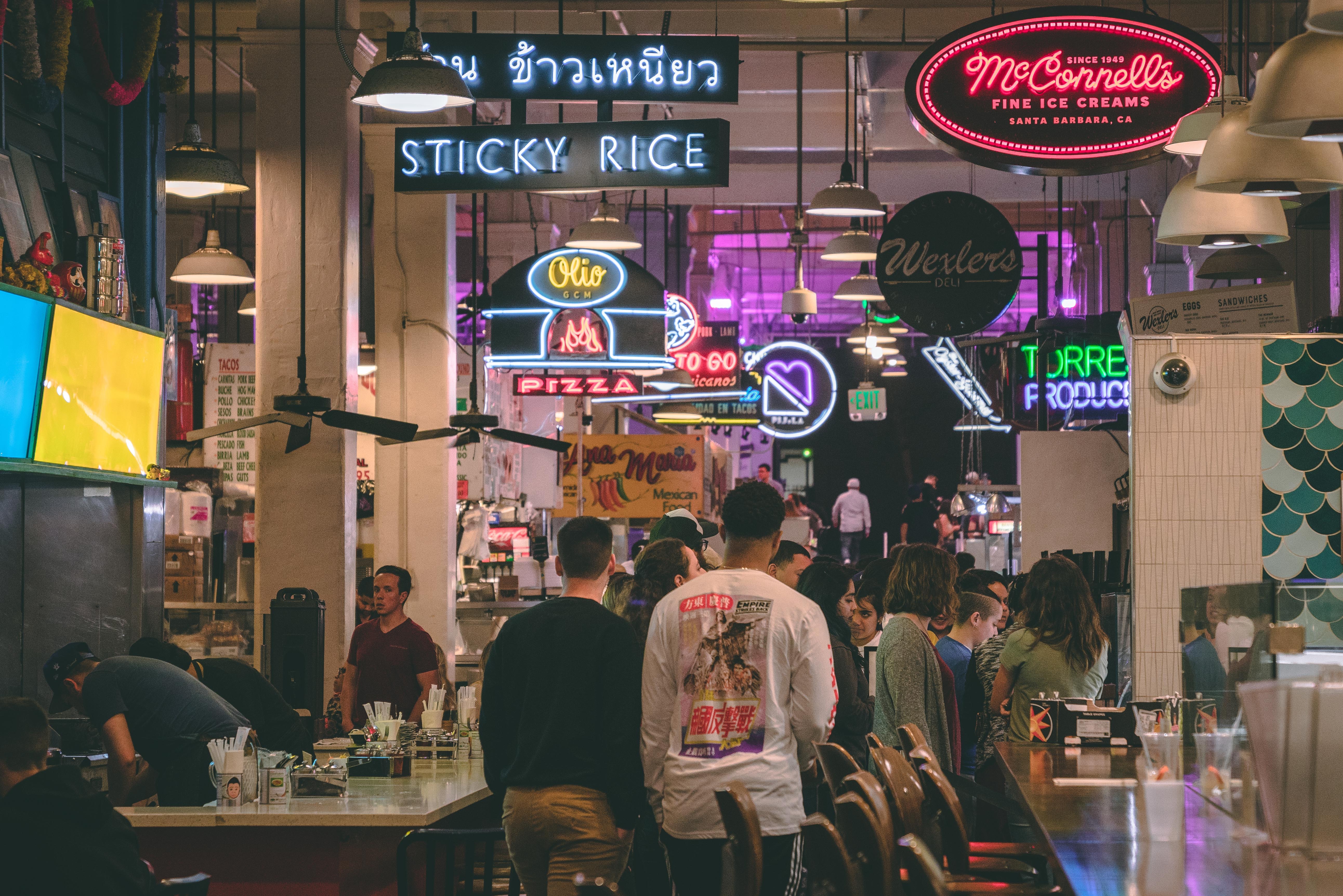
The food court brings together several dining establishments in a common consumption area. The first food court in France was inaugurated in 1990 in the Carrousel du Louvre, and it still exists, although it has evolved considerably since its opening. Very popular in Asia and widely adopted in North American shopping centers since the 1970s, the concept of the food court has been gaining popularity in France in recent years.

This concept adapts to various urban environments while emphasizing culinary pleasure and friendliness. The customer no longer considers themselves simply as a customer, but rather as a user, as they utilize the space and its resources, interacting with them to adapt to their preferences. Like all current trends, this offering leans towards authenticity while creating a global storytelling to ensure coherence. Today, we have moved from the era of food courts dominated by restaurant chains to an era where the qualitative experience is paramount, and its very name seeks to differentiate itself by now being called a Food Hall.

From a functional perspective, the pooling of several restaurants allows for resource sharing, optimizing production and improving profitability.

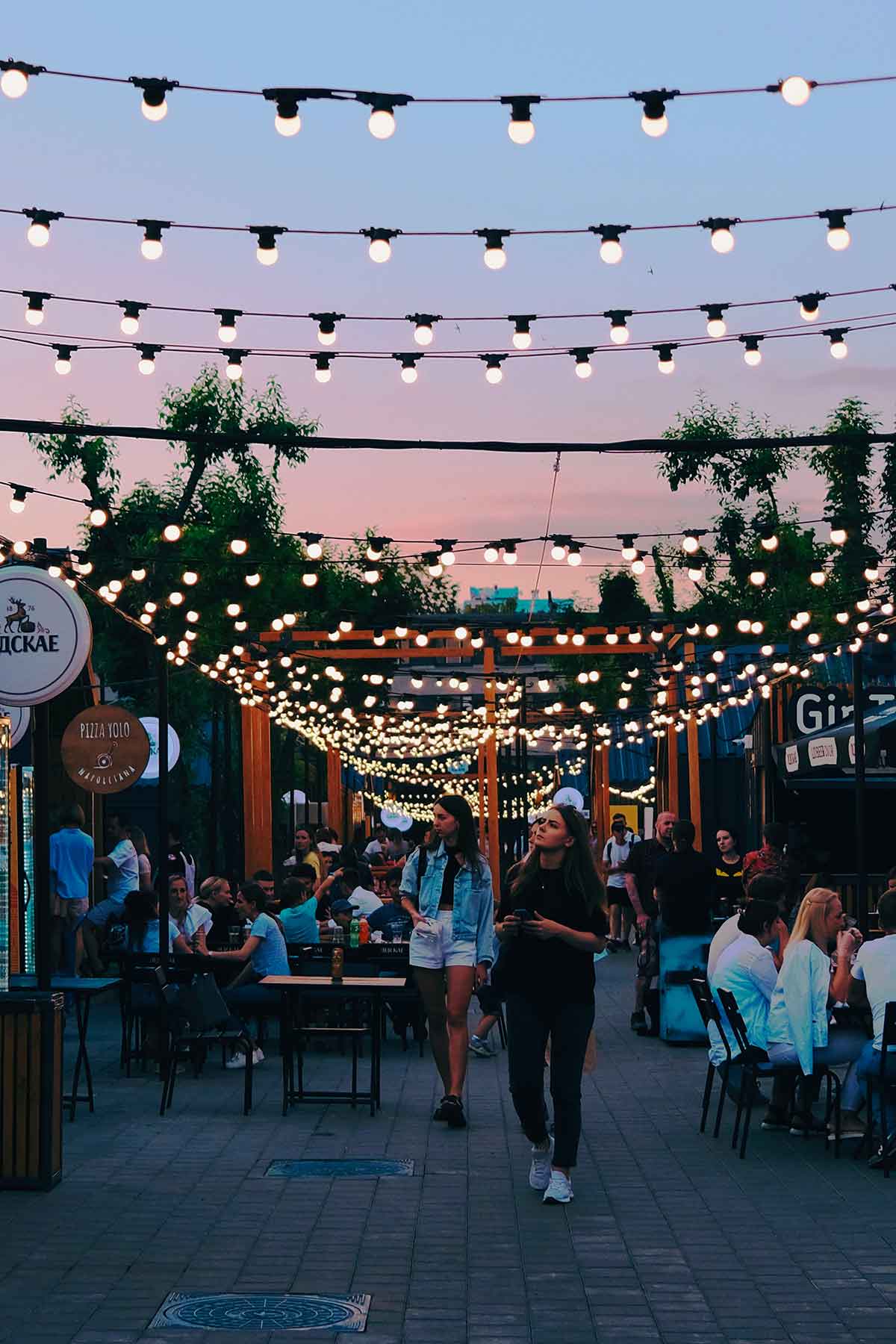
outdoor food court

The beverage, a strategic and profitable activity of the food court

The distribution of beverages in this type of venue holds strategic importance. Each food order is generally accompanied by a beverage order. These venues often offer a rich and attractive cultural program, thus creating a festive atmosphere similar to that of an establishment dedicated to beverage consumption. The operational simplicity of beverage production and the high margins often make it an exclusive point of sale for the venue's overall operator.

For a customer discovering the venue for the first time, already faced with apparent complexity, it is crucial to make their understanding of the venue's operation easier. Therefore, the distribution of beverages must be simplified.

Layout and decoration of food court bar

Order and payment system at the bar in food courts and food halls

There are two main systems for ordering and payment in food courts:

- The first system, traditional, involves assigning a payment terminal (POS) to each preparation point in the food court, and each stand is responsible for orders and payment. The customer must move from one stand to another to order, pay, and pick up their dish. This principle is less and less used, but remains common during culinary events or seasonal setups, as it does not require the implementation of a centralized ordering system. However, for the customer, this involves multiple ordering and payment interactions. This affects the perceived fluidity of experience.

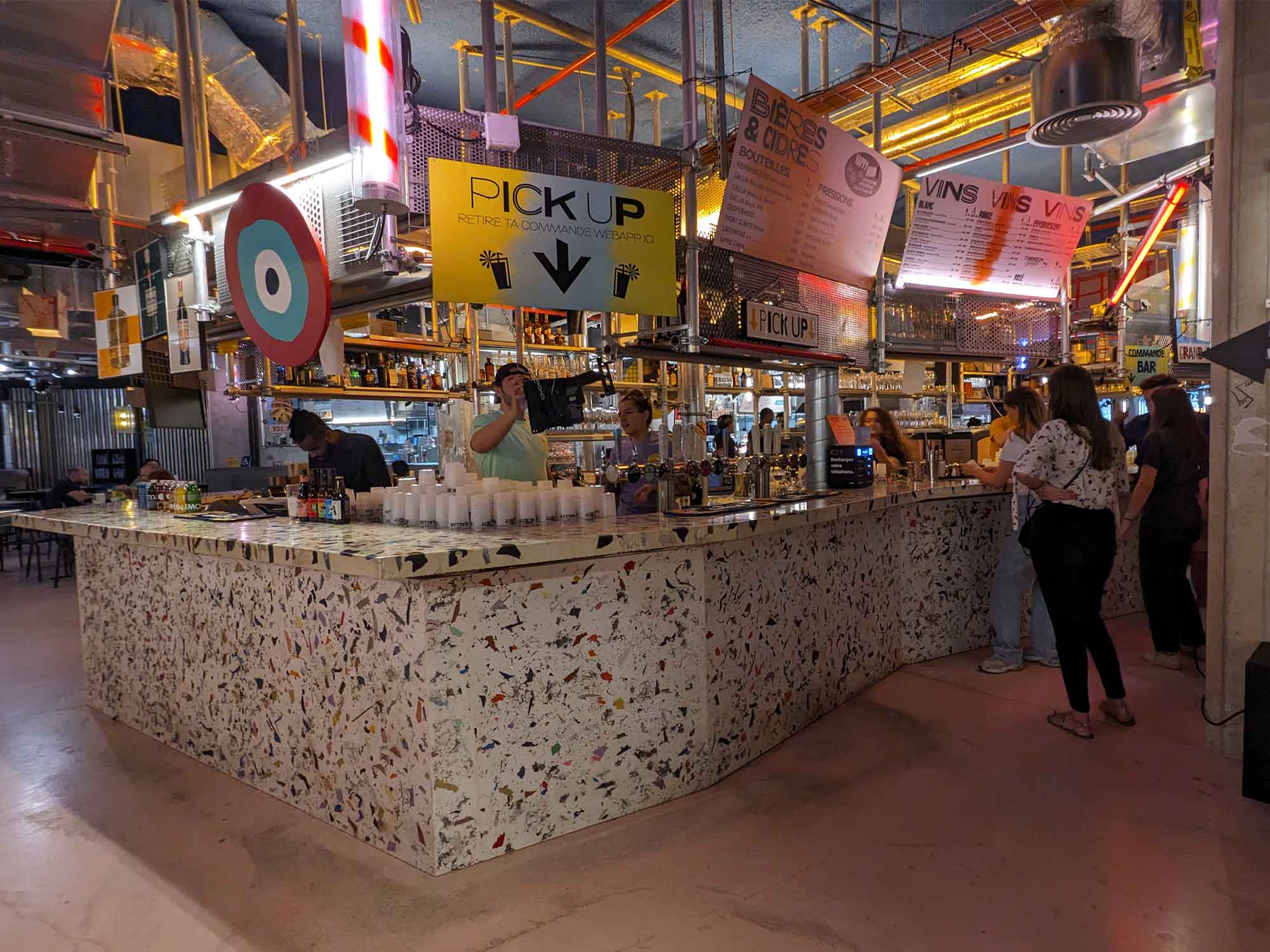
- The second system tends to become the norm, and it relies on the use of a centralized ordering system. Customers can access the entire food court offering via a register, a kiosk, an app, or a web app. They place their order and make the payment, then go to each stand to pick up their order. What is becoming more common is the use of a web app accessible on all smartphones, without the need to install a dedicated app. This system allows customers to place their orders from their phone and receive notifications when their dishes are ready to be picked up. This web app is generally complementary to a traditional register system, and physically, in the same place, customers are encouraged to use the web app to place their orders through signage and operators, but they can also order via a kiosk or a traditional register. The advantage for the owner is to have a centralized view of all orders, which facilitates tracking for all the food court's outlets.

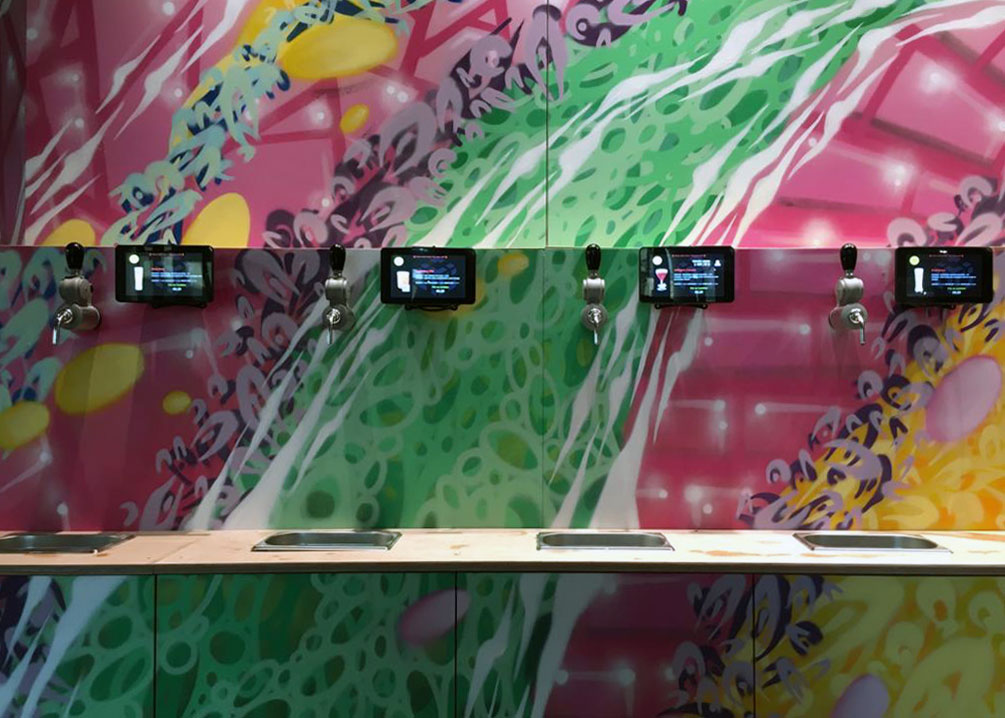
Regarding drinks, there is an increasing emergence of self-service kiosks with prepayment options. This is particularly suitable for beer dispensers installed on tap walls. Customers have the option to load a prepaid card with which they can serve themselves beer.

Order preparation at the food court bar

The centralization of ordering and payment at a single bar allows the service to focus on the production of drinks. Additionally, table service is rarely considered in this type of restaurant; customers typically pick up their orders at a designated pickup point.

By eliminating the steps of ordering, payment, and service, the goal of the food court is to provide drinks as quickly as possible.

To best optimize production, it is essential to identify the DNA of the bar as well as the technical aspects related to drink preparation:

- The extent of the menu: a single-product or multi-product menu with evolution throughout the day.


- The technicality of preparation: preparation of coffees, sodas, draft beers, cocktails, wines, fresh fruit juices, bubble teas, all these products require different equipment, tools, and service skills.

- The emotional and symbolic importance of the bar: is it a central, iconic bar where aesthetic desires are realized, or a hidden technical production bar? A combination of both is often considered.

Identifying the DNA of the bar and the technical aspects allows defining the concept's framework.

Unique bar or multiply the bars?

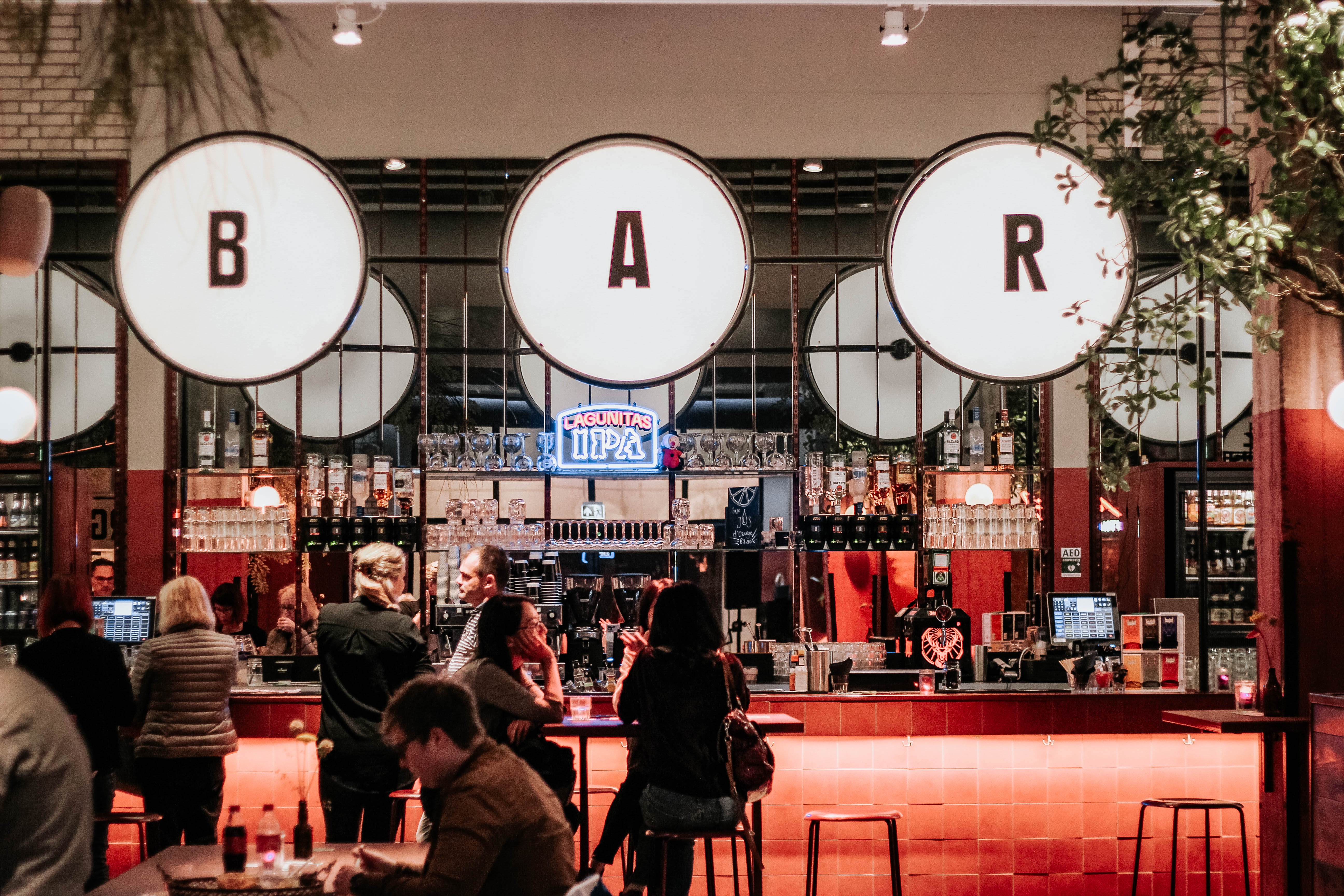
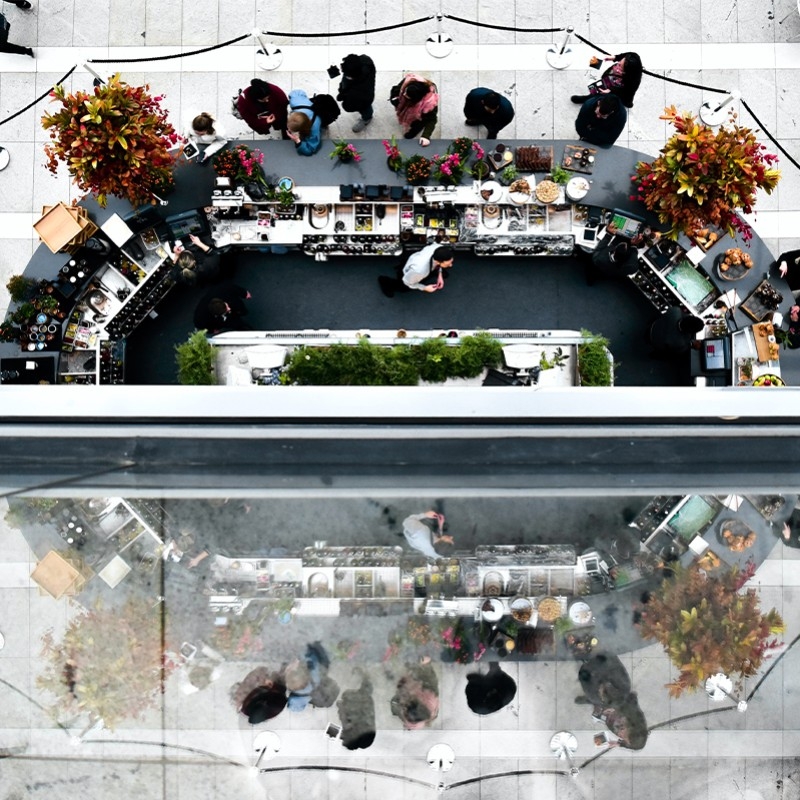
There are different types of strategies to consider. Concentrating all production in a single bar often simplifies the production process. Customers then perceive it as the central point for their drinks. It is advisable to make it centrally accessible so that all customers can access it without having to cross the entire space.

On the other hand, having multiple bars allows for additional points of entertainment. In this case, it is important to be clear about the offered services, either by providing the same service at each bar or by differentiating the offerings. For example, one bar dedicated to beers on one side and another bar specializing in cocktails on the other.

The last option is to conceal the production and only present an order-taking counter. This configuration may be confusing for Western customers, but it allows for exceptionally optimized organization and automation of order preparation, focusing on efficiency rather than aesthetics.

cocktail bar in the food court

Individual preparation or production line?

Each order placed online is fulfilled at the bar with a printed preparation slip or an order board distributed to the production stations.

In the most common setup, the workstations are separated at the back of the bar, allowing cocktail preparation, bubble teas, and the most complex operations to be assigned to the most experienced bartenders. The simpler drink service stations are then assigned to the versatile bartenders.

Once the glasses are prepared, the goal is to naturally gather them in the pickup area. Thus, the organization of the preparation stations is structured around this pickup area in a coherent manner, either with a linear or concentric flow.

Stock and bar waste

Food court bars stand out for their ability to handle large volumes and ensure quick order turnover. It is therefore essential to plan and minimize waste while implementing smart solutions to reduce unnecessary movement. Throughout our projects, we have identified and assisted our clients in implementing best practices, including:

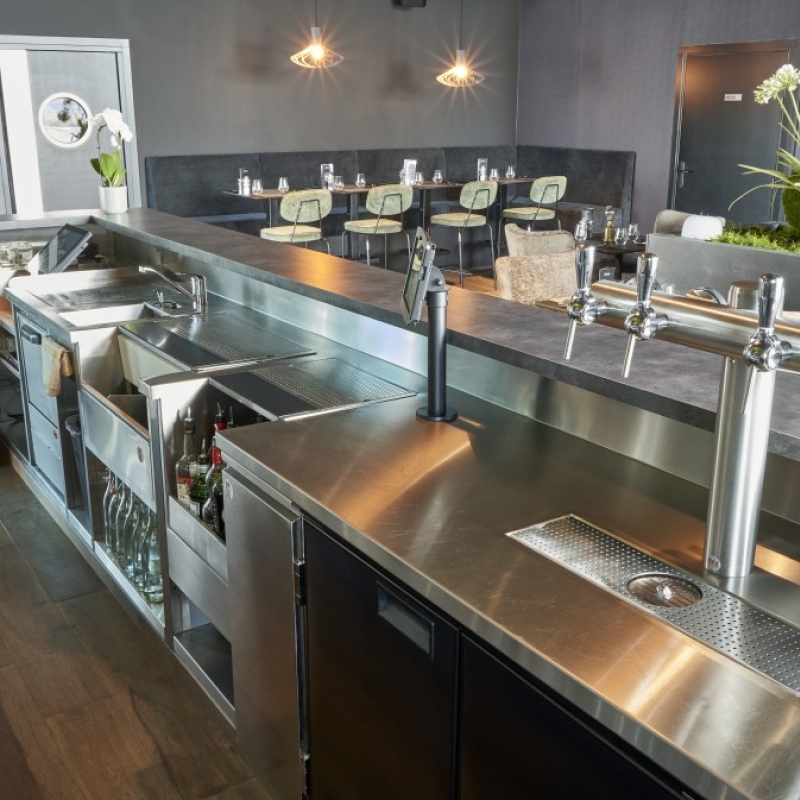
- Multi-production bar station: Our expertise as bar designers is particularly relevant in the context of food courts. As the last assembly area, the bar station must naturally be well-organized and easily accessible for extremely efficient production. By providing storage spaces for ice, bar stations also allow ice production to be moved to the kitchen, thus gaining additional storage space at the bar.

- Post-mix sodas: This solution uses remote bibs to serve all sodas at the bar. It involves reconstituting carbonated drinks such as lemonade, coca-cola, etc., from syrup concentrates in "Bag in Box" (BIB), water, and CO2. Post-mix often has a negative image of industrialization and poor quality. However, many post-mix syrup producers offer a wide range of quality selections. This solution also allows for the integration of recipes from local soda producers. The advantage is that it eliminates bottle management at the stock, bar, and dining area levels. The type of dispenser used significantly impacts perceived quality. It is recommended not to use automatic service post-mix machines, but rather to opt for a soda gun on the bartender's counter. It is also worth noting that post-mix helps reduce purchase costs as the drinks have no packaging.

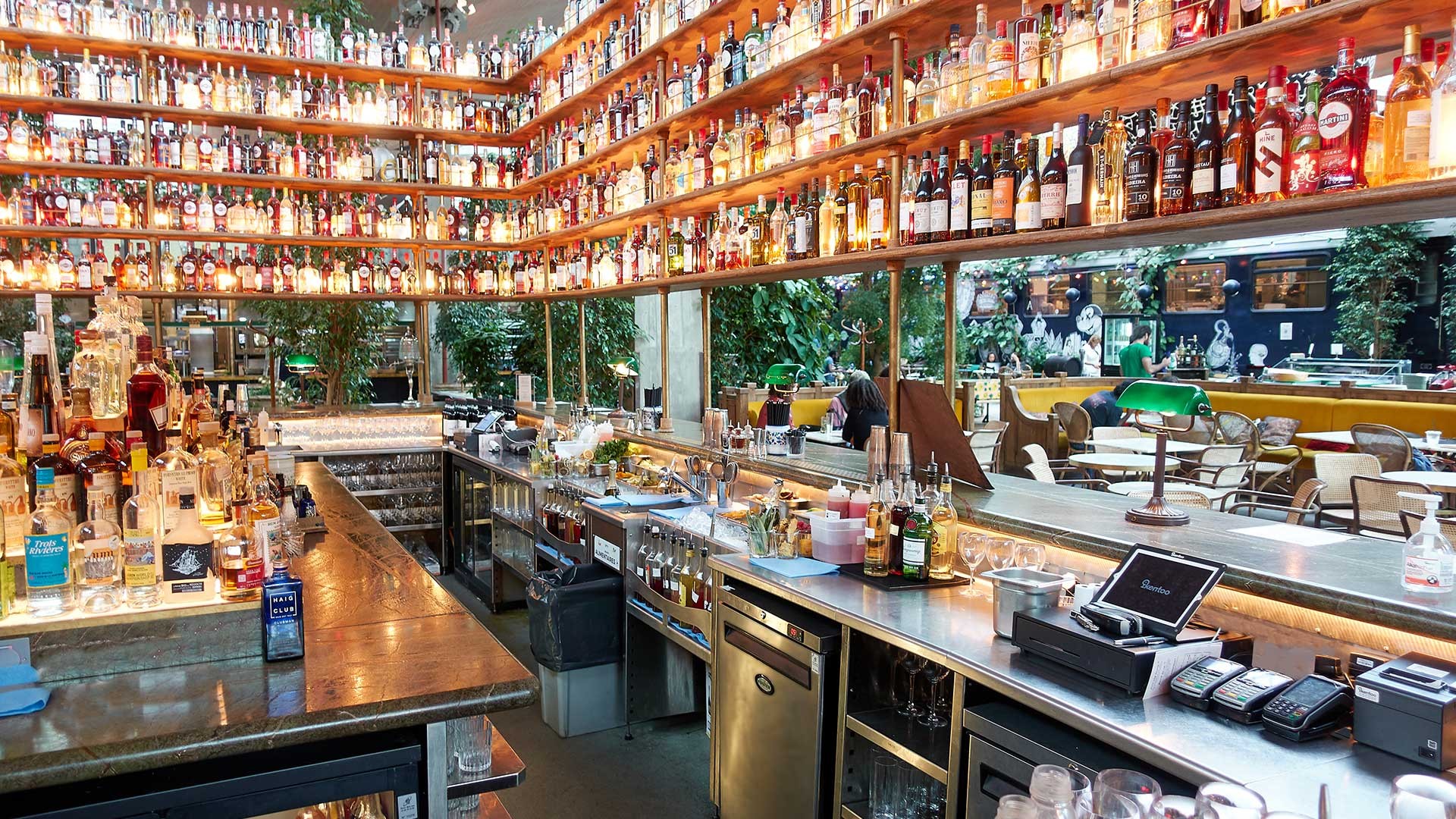
- Alcohol dispenser: Often overlooked, just like post-mix and remote draft beer, it allows serving alcohols at the bar using an alcohol gun equipped with an electronic dosing system. In the office, it is sufficient to fill the kegs with the necessary references for the bar. This avoids bottle management during service. Moreover, it is often associated with a control system that allows for the monitoring of orders served according to the doses dispensed by the gun.

- Automatic coffee machine: Automating the coffee machine allows all staff to prepare coffee without special skills and reduces preparation time. It also enables the automation of complex recipes such as cappuccinos.

- Automatic draft beer: To increase the flow of the beer tap, automatic dosing is ideal for serving multiple glasses at once. This system allows for a production of 78 UP/H for a single operator on 6 taps.

By integrating these solutions into a food court, it is possible to optimize production, reduce costs, and improve the overall customer experience.
Prepaid card beer vending machine

Washing glassware at the bar or off-site?

Glassware is considered part of the neutral stock. Whether the glasses are made of conventional glassware or reusable plastic, once the glasses are finished and left on the table or deposit areas, how do you manage the washing process to have them ready for use at the bar?

In a traditional restaurant bar, glassware is handled in a glass washer at the bar. When clearing a table, the dishwashing area at the bar is often on the way to the main dishwashing area. Therefore, it's quite natural for the glassware to be taken to the bar.

Managing this in a food court is more complex, with a larger volume of glasses, yet both bar and remote washing solutions are used.

- Bar washing, generally consisting of two 50*50 glass washers, requires a team member to continuously handle the washing of glasses. The advantage is that the glasses are available at the bar as soon as the washing cycle is complete. However, this requires another team member dedicated solely to collecting all the dirty glassware from the dining area.

- Remote washing, in the dishwashing area. The separation of cutlery and glasses is done only in the dishwashing area for machine washing. This offers team members simplicity in collecting the dirty items. However, once clean, the glasses must be brought to the bar. To facilitate this, we create aesthetically pleasing trolleys loaded with clean glasses at the dishwashing area, which are then slotted into place instead of shelves at the bar, avoiding any unnecessary handling. This is currently the best system to optimize the workforce and reduce clutter and disturbances at the bar.

Food hall design

Food courts and food halls are exciting bar layout grounds that offer real opportunities for career development. Each project has its own specificities and does not necessarily require the same solutions. It is therefore important to think strategically about organization, equipment choices, and service providers.

A food court bar must be designed to satisfy both customers and bartenders while improving profitability.

The Bar Circus team, with its experience, is ready to assist you in the design and implementation process of your food court bar, in order to create a food court bar that fully meets your expectations and is a source of satisfaction for everyone.

You may also be interested in these other tips