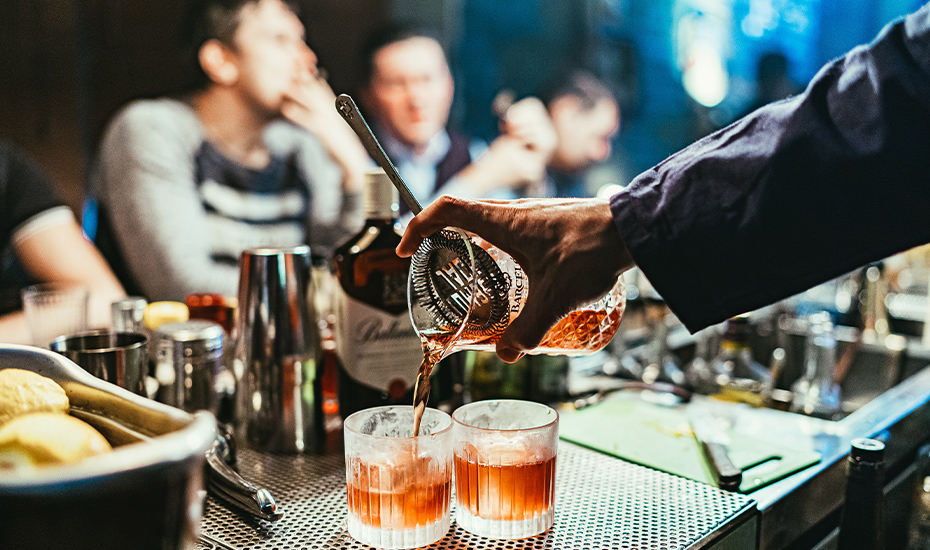
This is one of the first preparation stations that appeared in the United States. The characteristic of old bars in the United States, like the majority of Anglo-Saxon customer counters, is a very wide customer counter, with a minimum width of 50 cm, and a wide, open gutter on the bartender's side. This feature is shared with pubs in Ireland and England. The bartender prepares the drink directly on the customer counter, in full view of the customer. He simply needs his stock of bottles below.
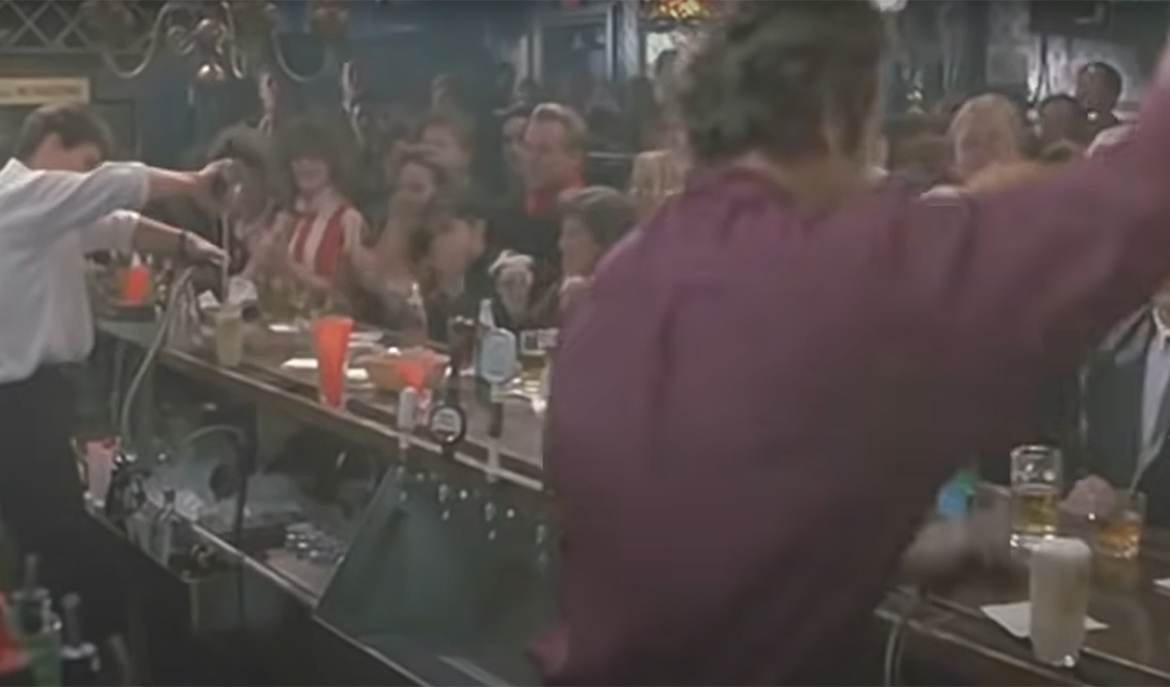
Cocktail, film directed by Roger Donaldson, 1988
The uniqueness of this type of station is having a very low speed rack where the necks of the bottles are grabbed 60 cm from the ground. This is almost at mid-thigh level.
Some bar stations in the United States can be found with a direct heritage from these old stations. They often remain very low with the integration of new equipment. For example, the establishment "The Dead Rabbit NYC" still has the OLD TIMER cocktail station principle with very low bottles arranged in a staircase manner. They have succeeded in this establishment in modifying certain parts to develop functionalities.
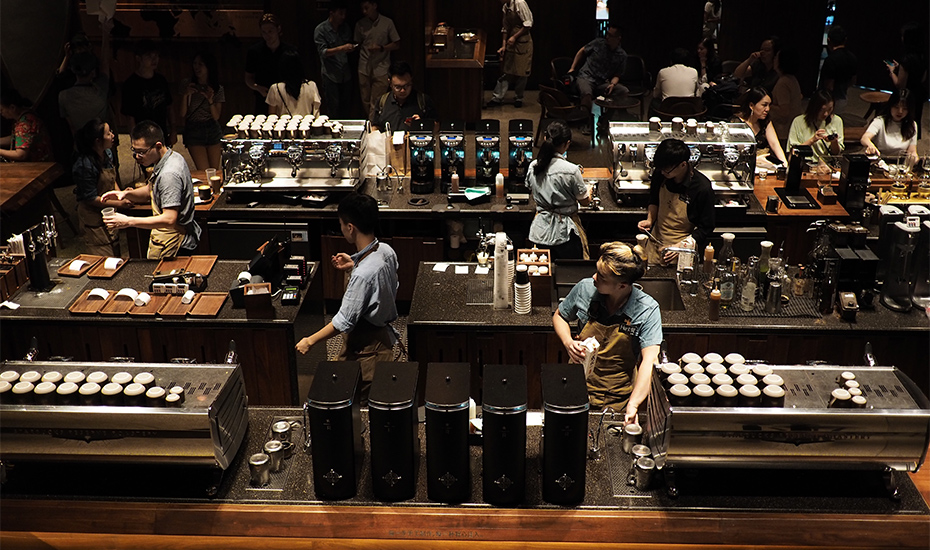
The main feature of the "INTERNATIONAL" type cocktail station is to allow for an impressive production volume, primarily by having a bottle storage space on a dedicated front bar staircase. This configuration allows for more than 30 bottle references to be poured at the front bar.
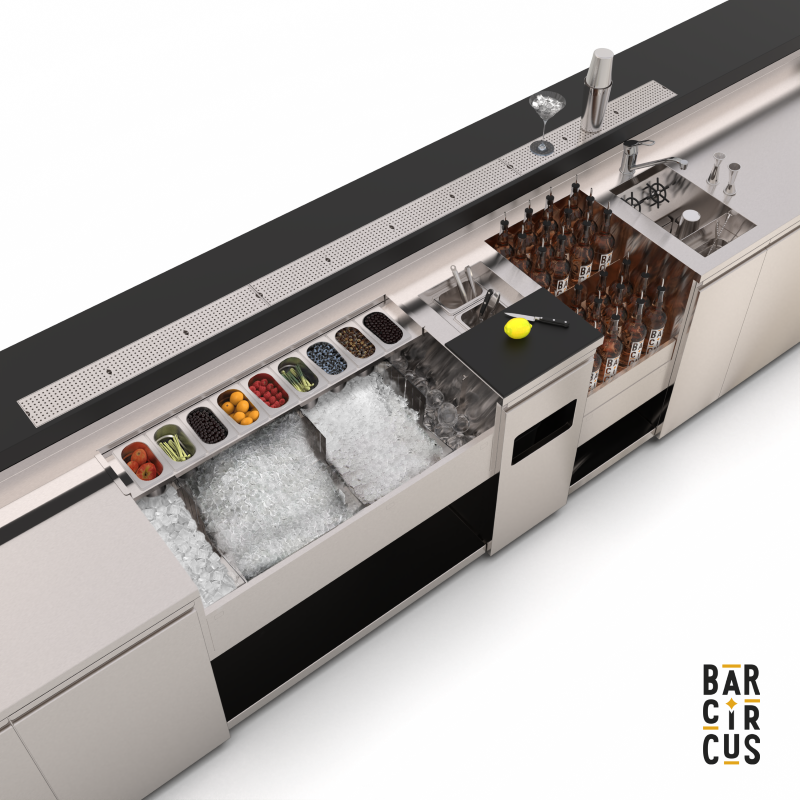
This solution is mainly found in Anglo-Saxon countries, in some new establishments in Asia, and in high-volume establishments.
This way of arranging the station significantly increases the width of the cocktail station.
This cocktail station is the most common today. It consists of various elements: icewell, speedrack, sink, shaker rinser, etc. The peculiarity of the CONTINENTAL station is to store the bottles mainly in the speedrack in front of the icewell. On average, there is storage for 7 to 18 bottles in a single or double row. The ice tank can be compartmentalized to dedicate part of it to additional bottle storage at the expense of ice storage.
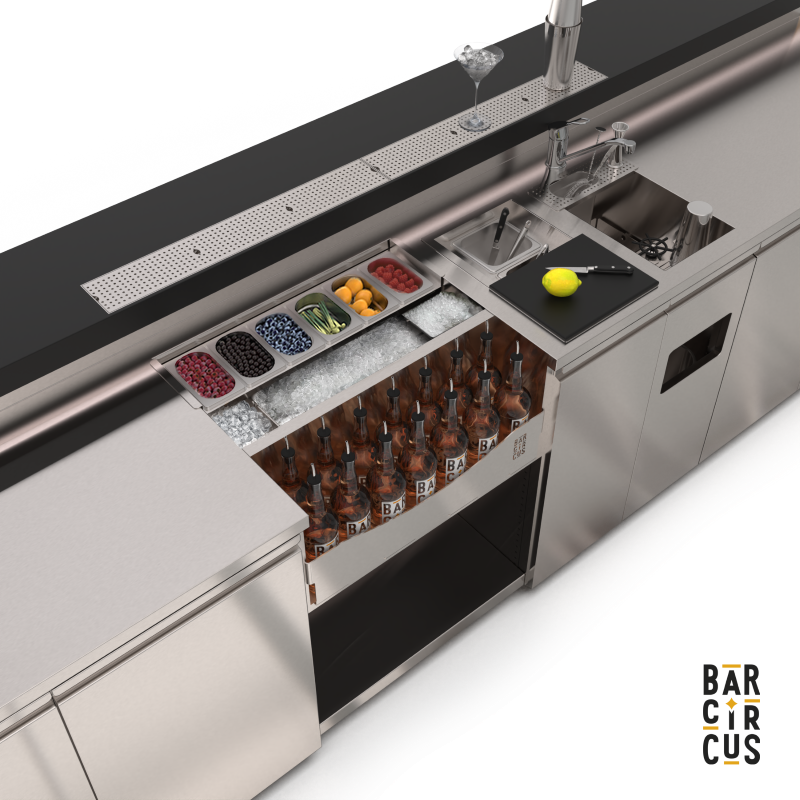
The assembly of drinks and cocktails is done either on the bartender's worktop or on the counter rail. This depends on the configuration planned during the design.
Be careful, a cocktail station with a double icewell extending beyond often causes back problems. The risk is that the customer counter is too far away, forcing bartenders to constantly have their backs in tension to work. If one must choose an extended station, ensure not to exceed 45 cm of setback between the customer counter edge and the bartender’s chest.
We then understand the limitations of the CONTINENTAL type station with a double row of integrated speed racks; ice storage is reduced. By increasing the number of available bottles, the ice volume is decreased.
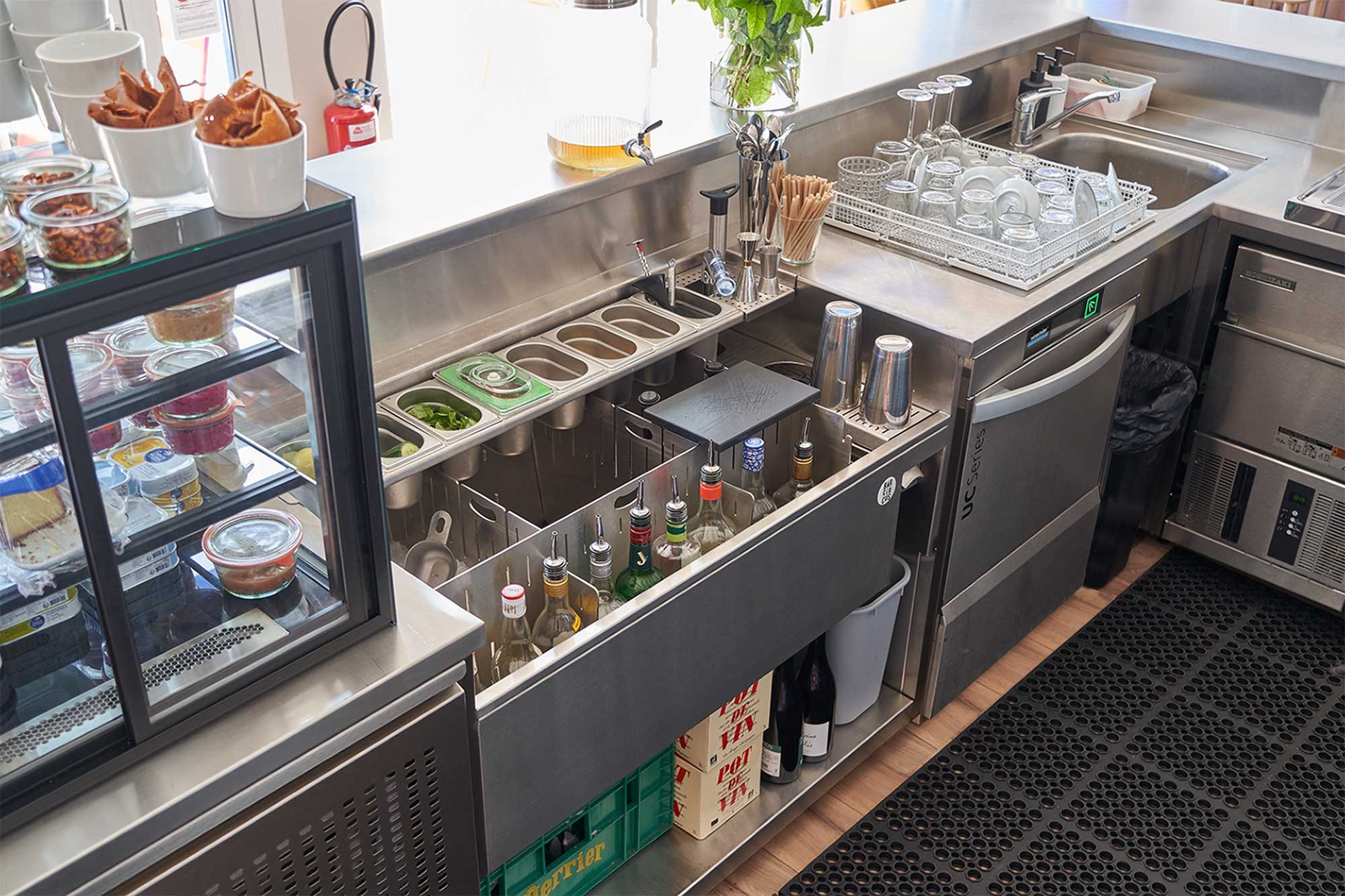
The "compact" cocktail station type is characterized by complete stations not exceeding 1.5 meters in width. These stations mostly appeared starting in 2015. In a minimal space, these stations aim to offer a balanced sending area. There are many variants, each with its own advantages. Most are available in an embedded version.
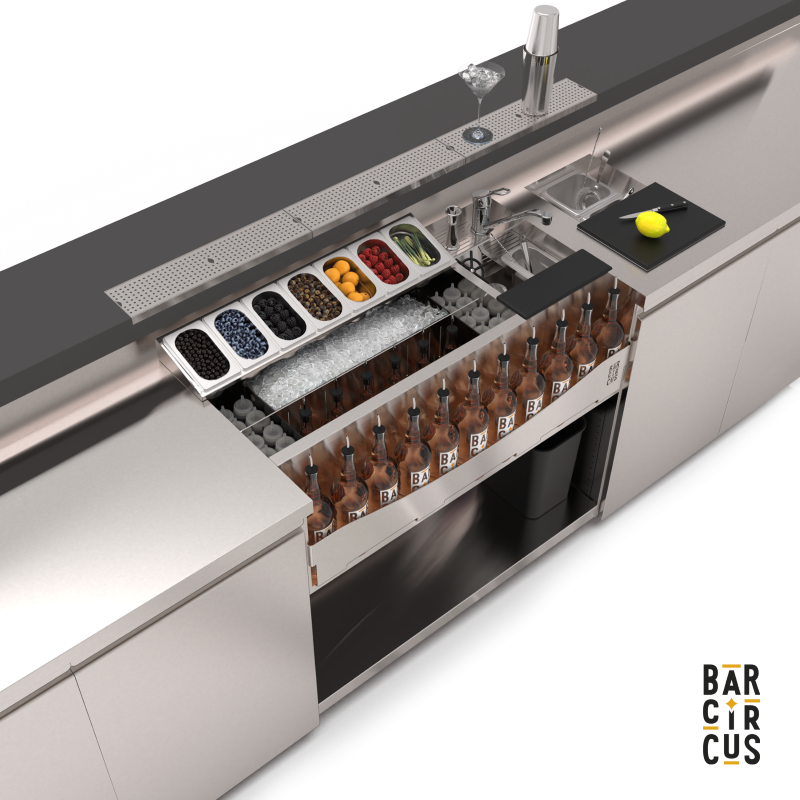
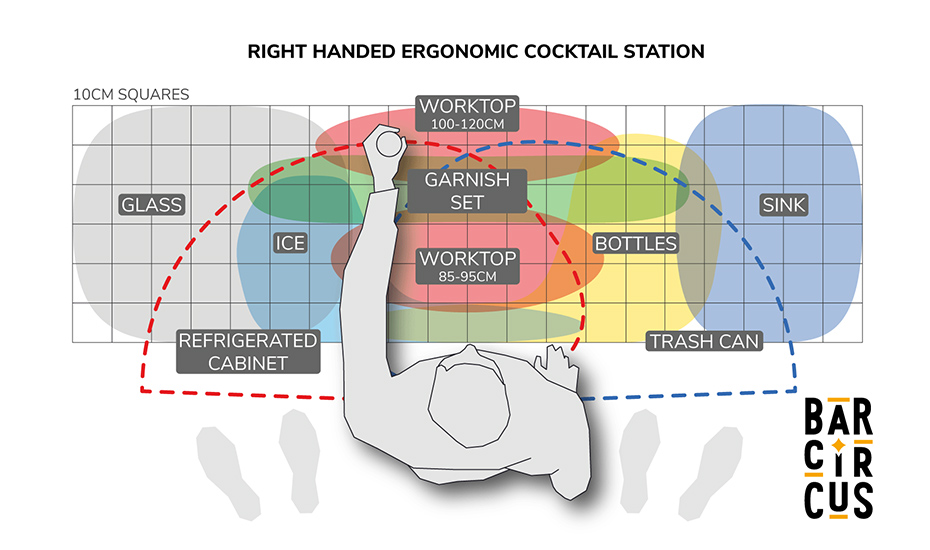
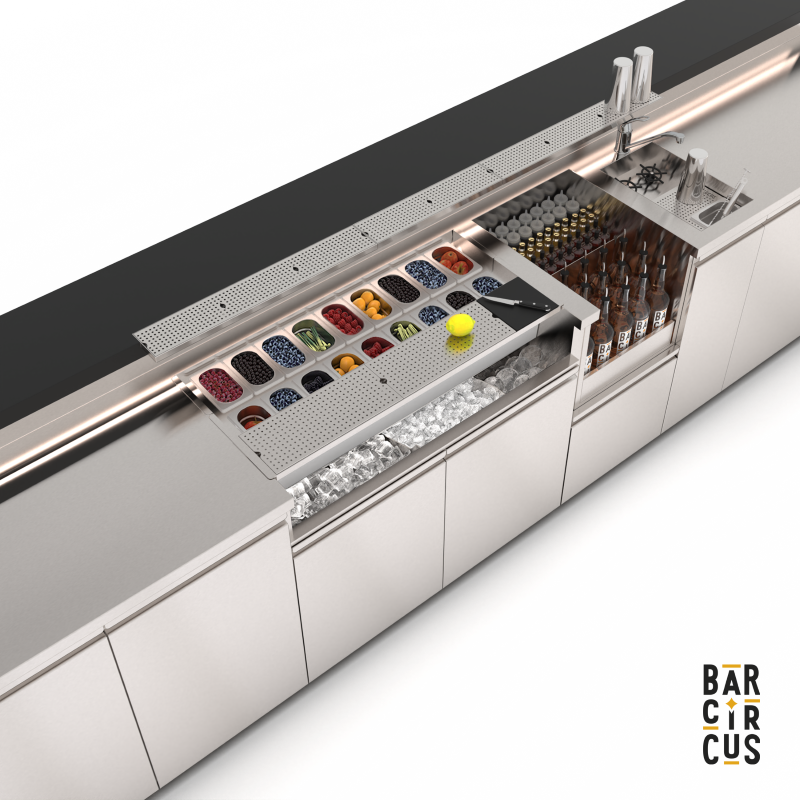
One of the most used stations in the compact range is the Unity Bar Circus cocktail station. It has been the subject of extensive research to offer the best working comfort and the largest storage space in a minimal workspace. It is the international winner of the prestigious RED DOT DESIGN award recognizing its design and innovations. All its innovations protected by filing have brought major improvements in the cocktail station universe, such as the single basin with an inclined bottom. It allows a 165L capacity, prevents odors from the pipes from rising, and enables station cleaning in record time at the end of service. Another innovation of the station is the inclined comb separators. These stainless steel separators fit the station perfectly and offer unparalleled modularity. It is possible to decrease or increase all compartments according to one's needs and work habits. The station also includes many accessories and details enhancing working comfort.
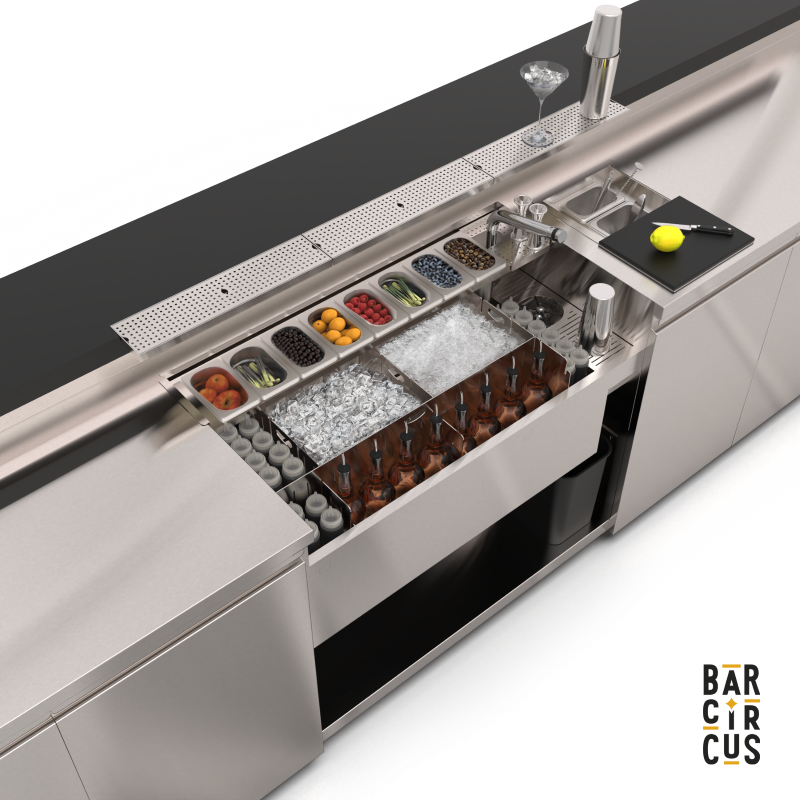
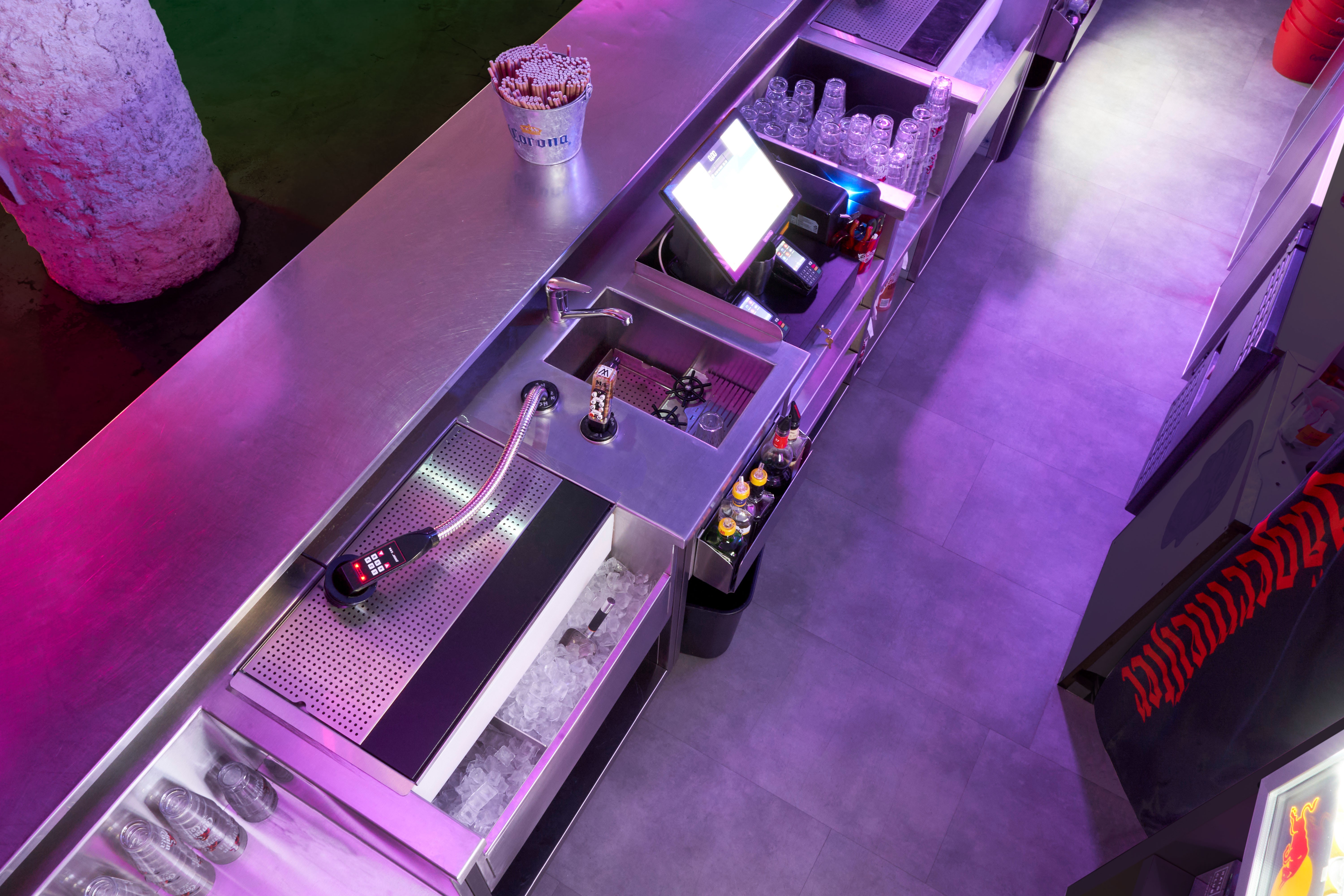
The "nightclub" cocktail station type is characterized by high-volume stations with a focus on the speed of drink preparation. There are many variations depending on on-site service. Increasingly, soft drink refrigerators are being replaced by post-mix guns. This helps reduce restocking and decreases the time it takes to prepare drinks. To optimize production as much as possible, the glassware stock is located at the front of the bar, ready to be grabbed with the left hand. The glass is prepared on the bartender's workstation, with garnish and ice distributed via fast ice wells. Alcohol is accessible with the right hand in an inclined speedrack to increase the speed of bottle handling. This system is increasingly often paired with control systems. In most cases, the bartender handles the payment themselves, so they need a cash register or card terminal space.
An alternative to the alcohol speedrack is offered with alcohol guns. These allow for perfect control of the doses when dispensing alcohols. Managing empties only happens during setup when refilling kegs in reserve. Depending on the establishment, sometimes no garnish is used, allowing the entire workspace to be used for drink preparation.
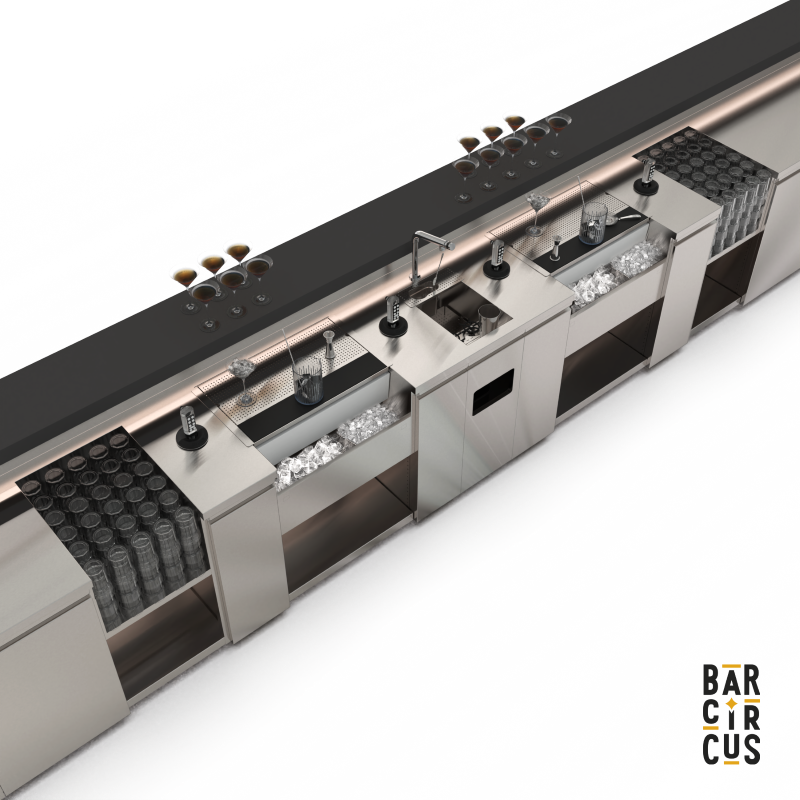
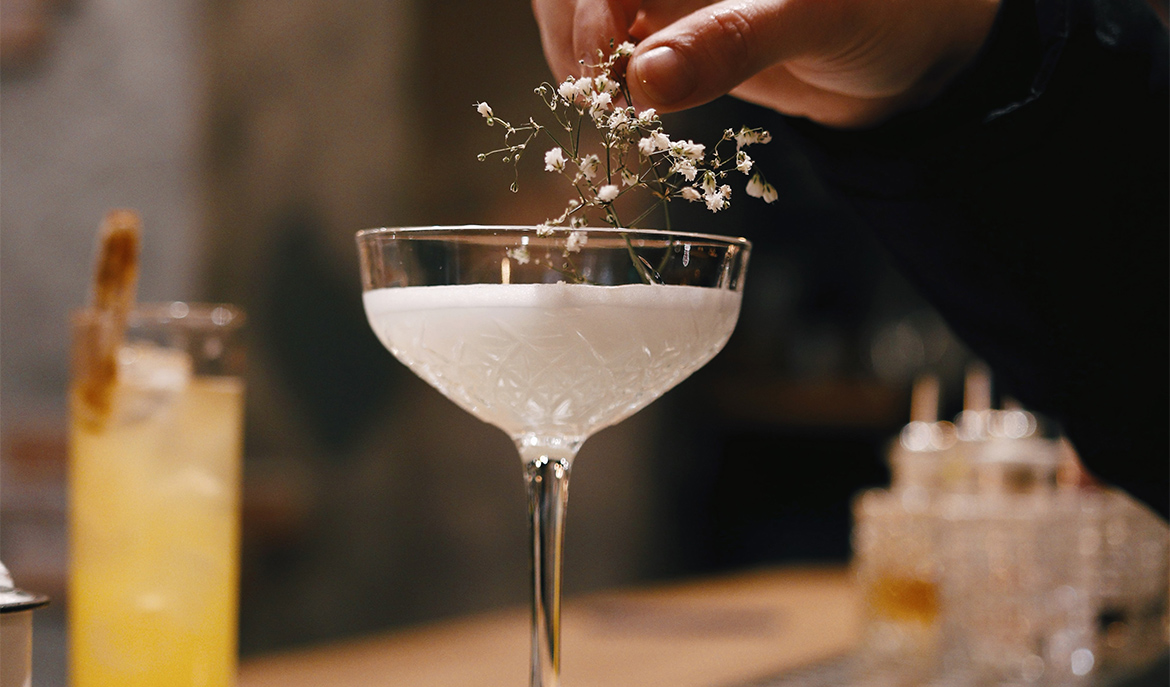
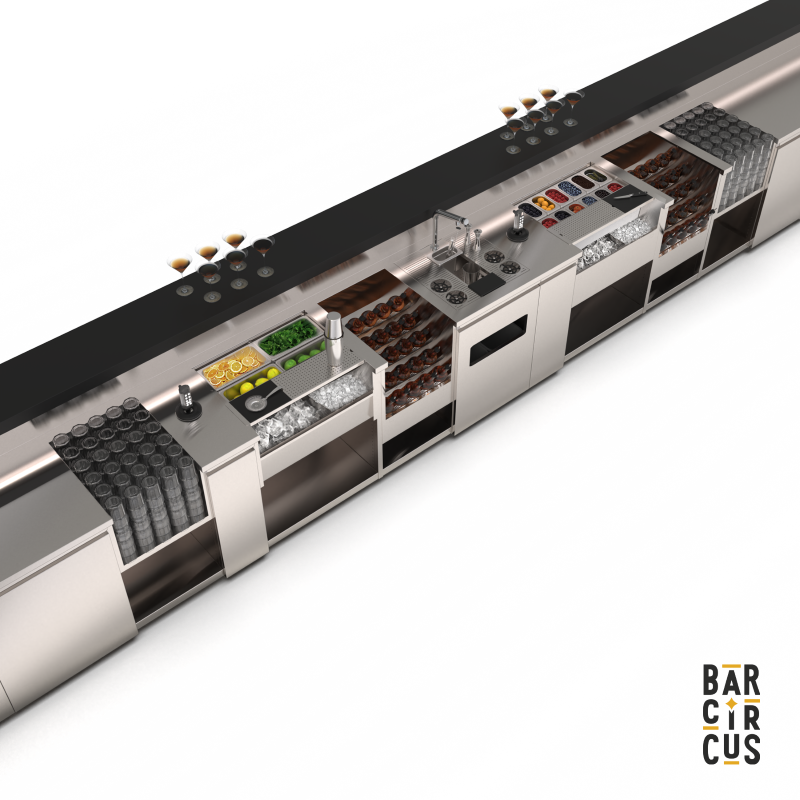
The "MIXOLOGUE" cocktail station type is characterized by stations with a large number of storage spaces and compartments for different garnishes, alcohols, and various preparations.The mixologist needs a large number of ingredients because their menu is well-curated, and the preparation is very elaborate. There must also be ample workspace as they require various tools for preparation, including portable bar appliances. The quality and precision of their work can be either hidden on the work surface or showcased on the preparation grid embedded in the customer counter. For their setup, it is preferable to install a fast dispenser to keep a quality ice supply in quantity for as long as possible.
Note that the majority of installations are done with refrigeration equipment, glass frosters, and other products.