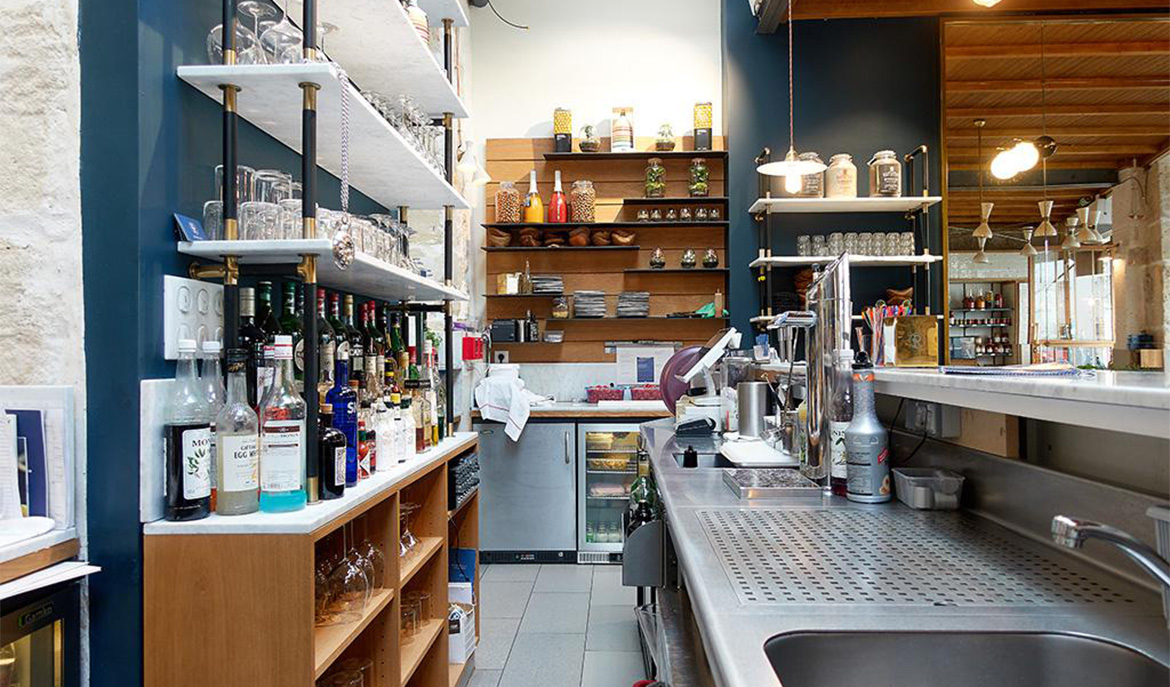
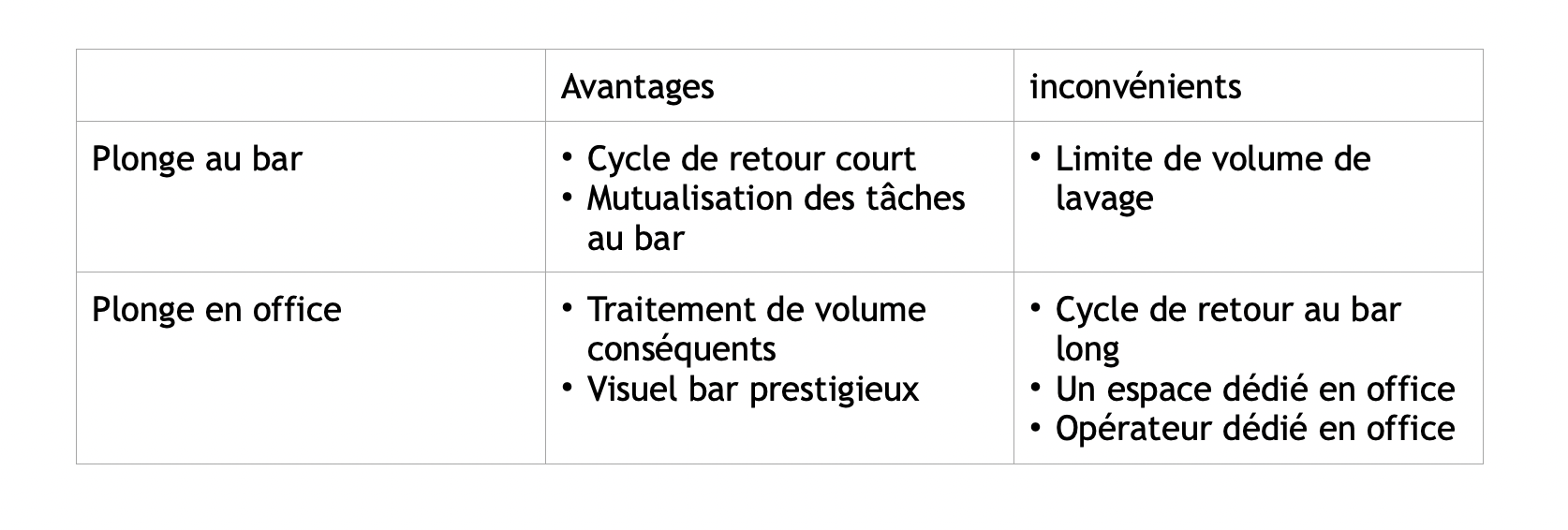
The dishwashing area consists of:
- A sink basin with a mixer tap: the habit of having two basins dates back to a time when there was no glass washer. One of the two basins was always filled with water with an overflow to wash the glasses. Some establishments still request a double basin if they have the space and a specific cleaning need. Most of the time, the basin measures 40 x 40 cm. The mixer tap must be robust, and the shape should be chosen according to work habits.
- The countertop, equipped or not with a drying rack: depending on the establishment, it is mainly used to place clean baskets temporarily while storing glassware, or it can also be used to place baskets for filling. If it is not connected to the sink, a drainage system is necessary. The size of the countertop should at least match the size of the basket to allow it to be placed there, and the available height under the counter should be sufficient for handling glasses in the basket. Ideally, a glass washer basket full of glasses placed on the countertop should not exceed the height of the counter. It should even be able to fit under the customer counter. Therefore, when possible, a lowered dishwashing area should be preferred.
- The trash bins: the dishwashing station receives all returns from the dining area. Plan for two trash bins. The first for general waste, mandatory, with a minimum capacity of 39 L. The second is for empty bottles, calibrated based on the menu. This can be a waste bin or a second trash bin. It is preferable to have access to the trash bin through a door with a hatch or chute. A waste disposal hole (TVO) on the work surface is an alternative with a speed advantage, but waste often accumulates around it, which affects clients' perception of hygiene.
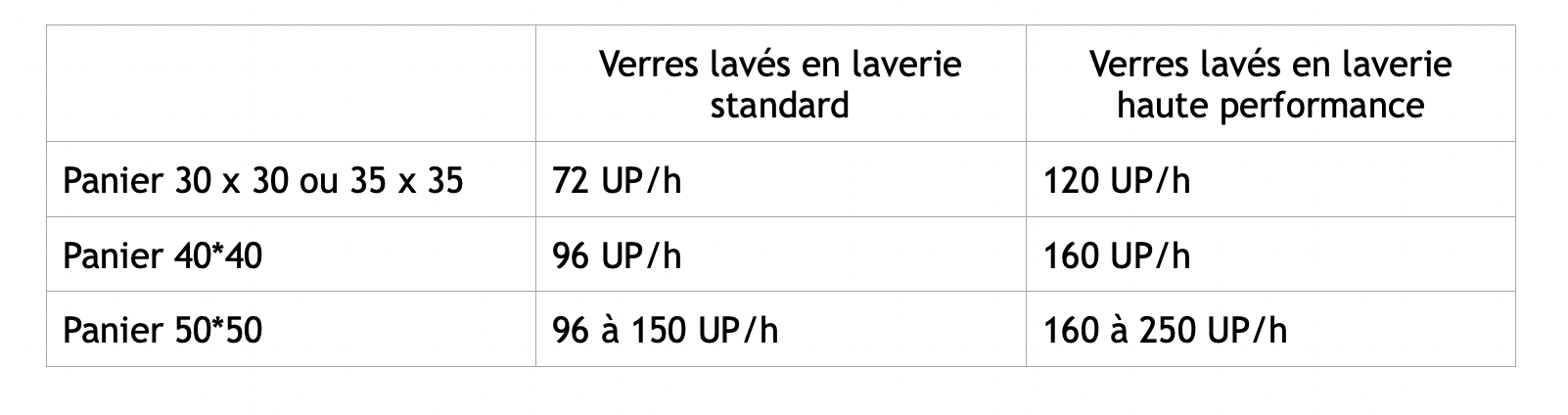
- The professional glass washer: washing solutions are distinguished by the quality of washing, referred to as standard washing or high-performance washing. High-performance dishwashing provides exceptional washing quality, far superior to standard washing. When glasses come out of the machine, there is no need to wipe them, as the cleaning and rinsing water is purified from all impurities by an osmosis system. The price difference between the two solutions remains significant. A quality standard glass washer costs an average of €2500 excluding VAT, while a quality high-performance set including the glass washer, water softener, and osmosis system averages over €11,000 excluding VAT. The price of a complete quality system with an osmosis system remains very expensive and is therefore reserved for establishments where glass washing is a priority. This is the case for prestigious establishments, cocktail bars where special attention is given to glassware.