advice

This section brings together all the best practices from design to execution of efficient stainless steel bar stations. As every establishment has its own specifics, we share our knowledge and industry experience as bar designers and builders to help you better understand your project.

MAINTAINING A STAINLESS STEEL BAR

- Categories : Best practices

No matter the dimensions of the bar, the maintenance of a stainless steel counter or any stainless steel furniture in a commercial food service environment must be rigorously followed to meet strict hygiene standards. The risk for any establishment involved in food processing lies in cross-contamination, whether related to chemicals and their residues or other contaminants. It is essential to ensure the cleanliness of the equipment.

The quality of stainless steel is by far the most recommended when the surface is in direct contact with food products. It remains non-porous, resistant to daily moisture, smooth, heat-resistant, and does not oxidize or does so minimally over time. Unlike some materials, stainless steel does not react to acidic foods like tomatoes, oranges, and lemons. All of this makes it the ideal material for bars.

Natural protective layer of stainless steel.

Stainless steel naturally produces on its surface a thin, almost invisible oxidation layer that prevents air from coming into contact with the rest of the material. This oxidation layer is beneficial because it prevents the rest of the material from being altered. To maintain this, make sure to keep the material clean, free from any dirt, grease, or bacteria.

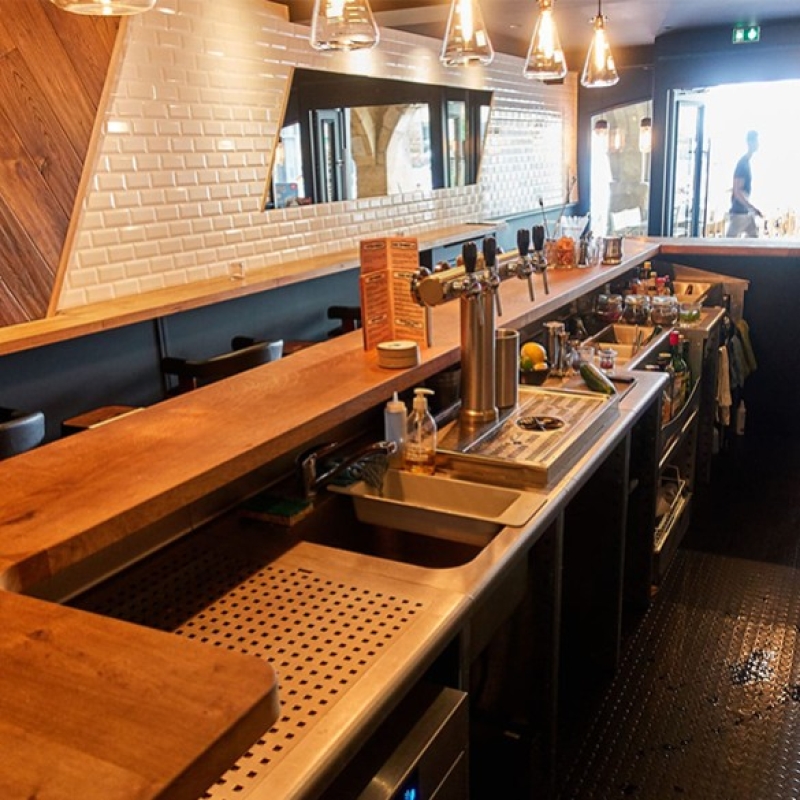
Stainless steel bar

Frequency and Methods for Maintaining Stainless Steel

Frequency:

At the end of each service.

Cleaning Method:

Stainless steel should be cleaned regularly to remove any dirt that accumulates on it.

Using a sponge or a cloth (on shiny finishes) and suitable cleaning products is sufficient to maintain its original appearance.

Rinse thoroughly with clear water.

Dry by wiping with a clean cloth to avoid streaking effects.

Optionally, a special food-grade stainless steel polish can be used as a finishing touch.

Products and materials prohibited on stainless steel:

- Disinfection products that are hot or concentrated.

- Acidic products pure or mixed with alkaline (basic) products.

- Any products containing hydrochloric acid, even diluted.

- Bleach and all products containing chlorine indicated under the mention "bleach," "chlorine," "chloride (salts)" even diluted are strictly prohibited.

- Any cleaning product containing abrasive grains.

It is also forbidden to use any abrasive sponge, abrasive brush, or any other abrasive object. The surface appearance of stainless steel is brushed, shiny, or micro-scratched. Any use of an abrasive object would result in a permanent alteration of the surface appearance.

In all cases, thorough rinsing remains the most effective solution against corrosion. It removes salt and active agents and enhances the effectiveness of the protective layer of stainless steel.
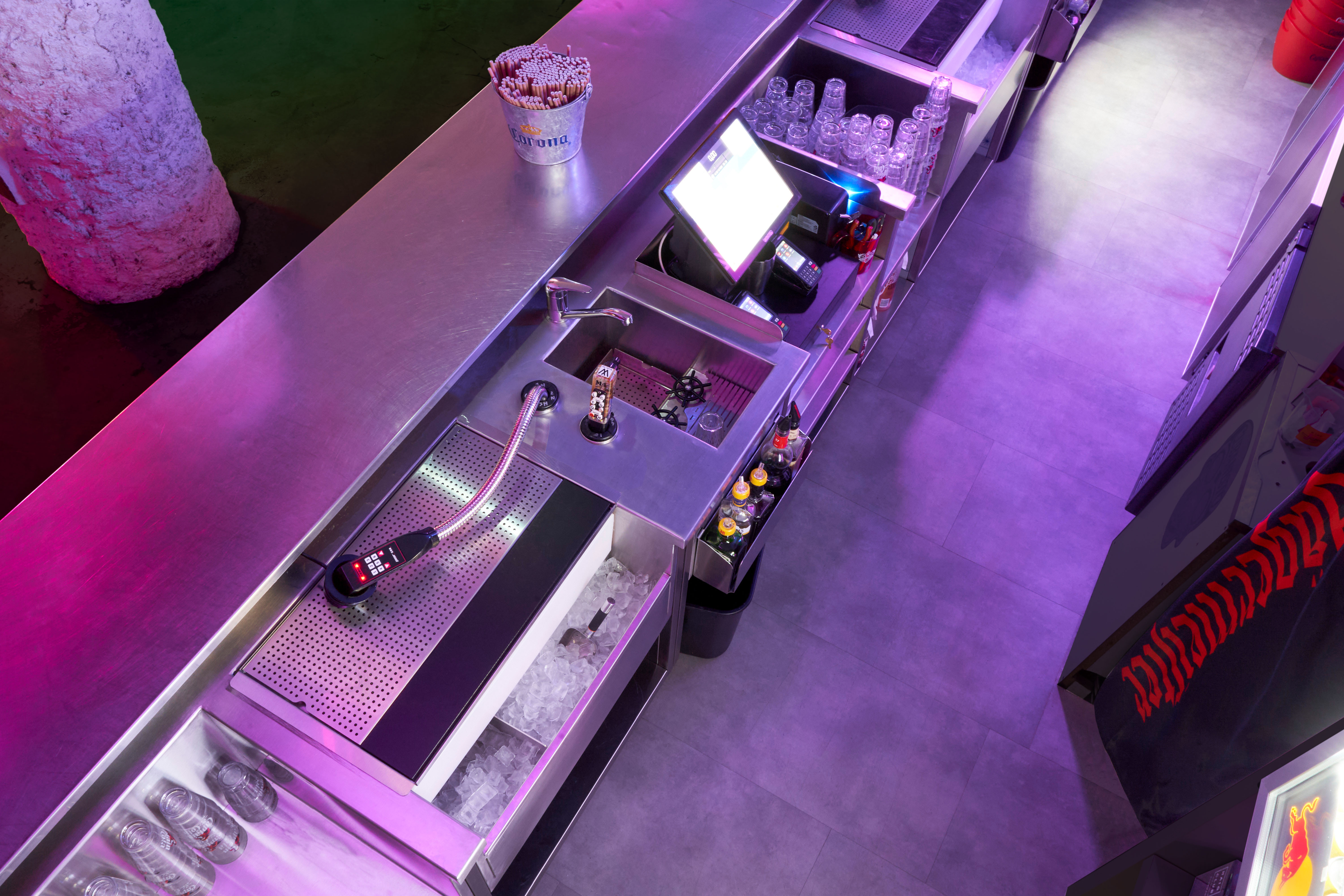
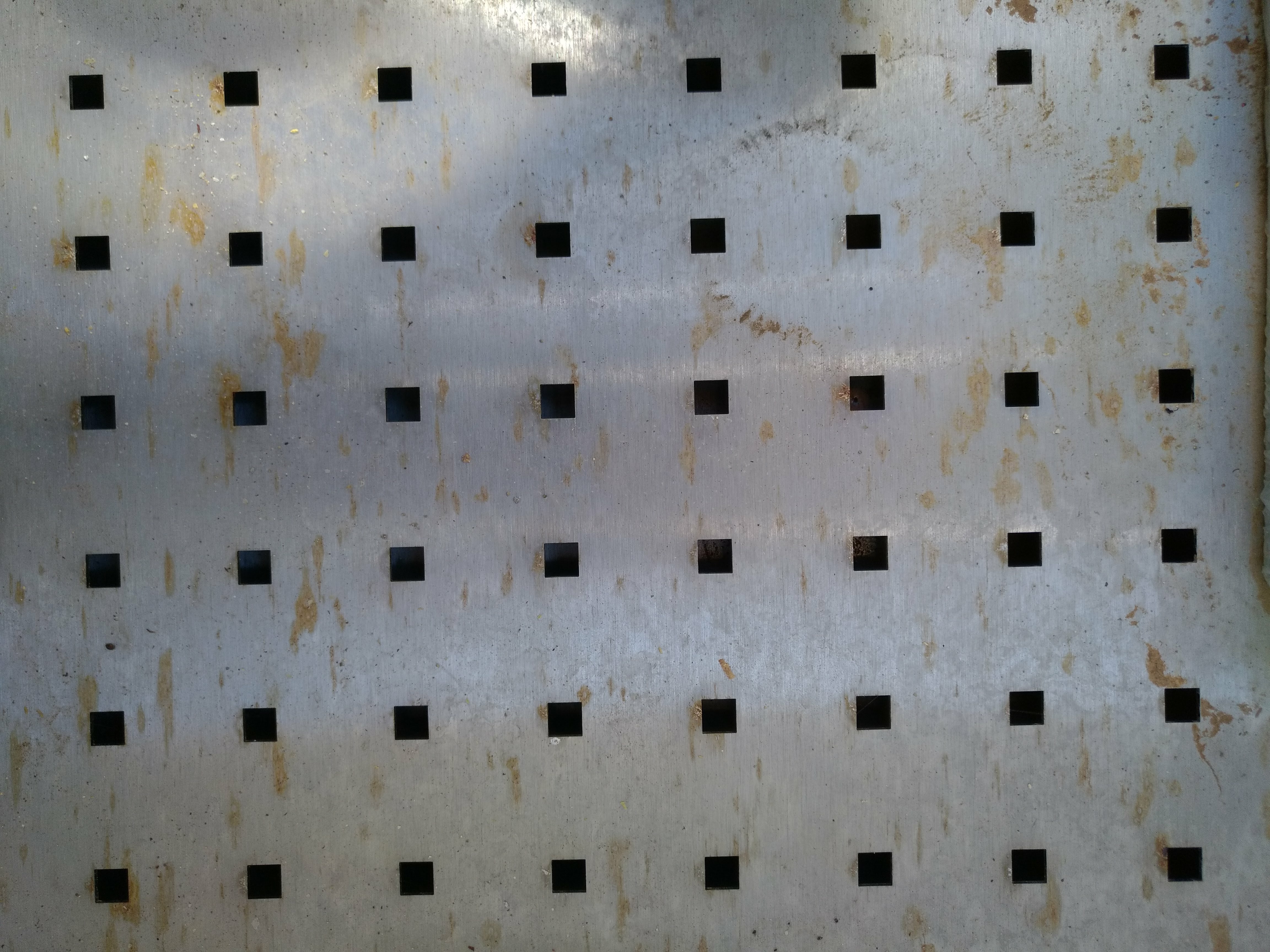
Stainless steel rusts:

Whether it's 304 steel or even 316, rust spots may appear. This is often referred to as "pitting" in stainless steel. It's not really a big issue, likely due to neglected maintenance, and it's easy to restore it to its new condition. One common cause is the contamination of stainless steel by iron. This contamination often occurs when someone cuts steel nearby with a grinder, for example, producing steel slag that can embed on the stainless steel surface. Rust then appears around these points.

Removing and cleaning rust from stainless steel:

There are two methods to remove rust from stainless steel, one chemical and the other mechanical through abrasion:

- Apply a product that creates a passivation reaction on the stainless steel. These products are often nitric acid-based. It is important to follow the instructions carefully.

- Apply an abrasive paste. There are several types available. You need to rub with a soft cloth until the stains are removed.

Regardless of the method, after cleaning and rinsing the surface, it's always good to finish with a food-grade stainless steel polish to achieve a shiny finish.

You may also be interested in these other tips