advice

This section brings together all the best practices from design to execution of efficient stainless steel bar stations. As every establishment has its own specifics, we share our knowledge and industry experience as bar designers and builders to help you better understand your project.

ALL THE STEPS FROM CREATION TO RECEPTION OF THE PROFESSIONAL BAR

- Categories : Best practices

In the professional bar creation project, the design work is divided into several phases ranging from programming to commissioning. This principle of phasing is common to most construction programs, regardless of the building or location's purpose.

Developing in the initial phase has the primary advantage of creating overall coherence and avoiding common technical pitfalls during construction or functional issues during operation. It is crucial to involve and encourage collaboration among all parties very early on, starting from the programming phase. All relevant stakeholders include the operator, the client, the architect, the project manager, the decorator, and possibly key subcontractors, as well as all parties involved in operational consulting, ergonomics, hygiene, and potentially technical-commercial suppliers of complex equipment who can guide choices and offer suggestions during the project.

Planning a professional bar counter upfront is crucial, as it is necessary to ensure the correct placement of networks. Without this, we often have to adapt predefined networks, losing operational space since the networks take up more room than they should. Worse still, we cannot fully meet the demand because certain functional equipment cannot be incorporated.

Most projects remain fairly simple in size and involve a limited number of stakeholders. The stages from design to commissioning remain fairly straightforward and obvious but require the same rigor as larger-scale projects.

To assist our clients, we offer support in stainless steel bar project steps.

For ambitious projects where the bar is an integral part of a larger construction program, a complete organizational structure is created, divided into four phases. The first phase corresponds to programming, the second is design, the third is execution, and the fourth phase is the preparation for commissioning.

Create a Professional Bar Through Programming

The purpose of programming is to gather and prioritize the needs as well as all elements of the financial, productive, technical, human, organizational environment, and any other useful data to complete the program for the professional bar counter.

The program materializes in the form of a document in which the client's and/or operator's needs are expressed.

A bar program generally includes:

- The diversity of the menu and the definition of all bar productions are usually presented in the form of technical sheets for the drinks.

- The quantitative production outputs on a daily, weekly, and monthly minimum and maximum basis.

- All useful technical information and constraints for the design, execution, and installation of the bar.

- All organizational, human, and social information and imperatives.

- Indications concerning possible evolution perspectives of the bar. Any other specifics beneficial for guiding the design phase.

The main objective of this bar programming is to communicate to the designer the problems to solve, the challenges to meet, and to specify the prioritization of objectives to achieve. The quality of the program will determine the relevance and accuracy of the proposals created. Often, we find that many modifications during the creation process stem from an incomplete or too briefly executed client programming.

The responsibility for issuing a comprehensive and clear program falls on the client.

All the Questions to Ask When Designing a Bar

Even before thinking about the equipment and stations to integrate into the bar, it is preferable to start by questioning the broadest possible topics. This is to have all the objectives to achieve in hand and a better understanding of the constraints.

By thoroughly considering and writing down this information, it is possible to establish the complete specifications for the bar. The answers should unveil the production quantity per service, the organization, the built environment, technical and functional constraints, hygiene, safety, compliance with employee rights, as well as the duration of the project and any potential future transformations.

WHAT? What Menu?

Is the offer mainly focused on a product family like beer bars, cocktail, rum, or multi-menu like a traditional brewery, hotel bar, or other? What are the bottle, draft, or tap references? How many references are there? These answers lead to choices about the types of workstations, their configurations, and related equipment.

HOW MUCH? What Volumes?

What volumes in liters, glasses, bottles, kg of coffee, accompaniments are produced at the bar? Are there any output ratios? These answers, considering the available staff and the size of the bar, will help calibrate the workstations, necessary equipment, and various storages.

WHEN? What Transformations Over Time?

What is the production timeline throughout the day? A club bar only opens for a period during which orders are relatively similar in the evening and night. A hotel bar may see its customer experience evolve from breakfast to lunch, tea time, dinner, and evening. The offer may also evolve with the seasons and events. Longer-term evolution might also be unknown and requires a flexible workspace. These answers help refine the workstations and equipment to choose.

Where? What spaces and locations are allocated to the bar?

What are the sizes and shapes of the professional bar counter? How is it situated in relation to the overall space? What level of friendliness is desired in the bar area? These questions help define the structure of the bar into which the equipment must be integrated. The answers also influence the organization of the bar, as the customers' view of the bar's visual aspect is also a parameter to consider.

HOW? What is the overall and decorative concept and what is its impact on the technique?

What level of hospitality is desired? What interactions are expected between the staff and the customers? What is the general atmosphere? All this information will guide technical and human choices regarding production types or advice during operation. For example, in a relatively peaceful area of a Palace bar, integrating refrigerators with the housed group is discouraged. Or in a place that does not favor interactions with bar staff and needs to exit the volume, one might opt for an assembly line type of production rather than a workstation production.

Specifications for Creating the Bar Counter

Depending on the project, the drafting of the specifications is always unique but follows a common framework. Below is a generic summary of the information to be included, which helps to address a large number of constraints and objectives to be achieved:

- Administrative and organizational information: project address, access, construction schedule, administrative conditions for site access, site management, client contact details, project management assistance contact details, billing contact details, identified contacts, interfacing companies, service limits.

- Project framework: project origin, business plan, evaluations, concept and menu, volumes, budget, quality level of the work.

- Structure and technique of the bar. Structural interface in the building, secondary works, and networks.

- Basic prerequisites: refrigerators, wine cellar, glass chiller, bottle cooler, bar freezer, coffee machine, beer tap, beverage dispenser, cube ice machines, crushed ice machines, freezer, glass washer, dishwasher, combined glass/dishwasher, high-performance washroom, citrus juicer, blender, juicer, ice crusher, heating equipment, point of sale terminal.

- Desired future developments or modifications: offer or structural.

- Human resources: skills, volumes, specificities, contracts, experience, and work habits.

- Operational logic: Sales blueprint, time-based offers.

The design of a bar counter

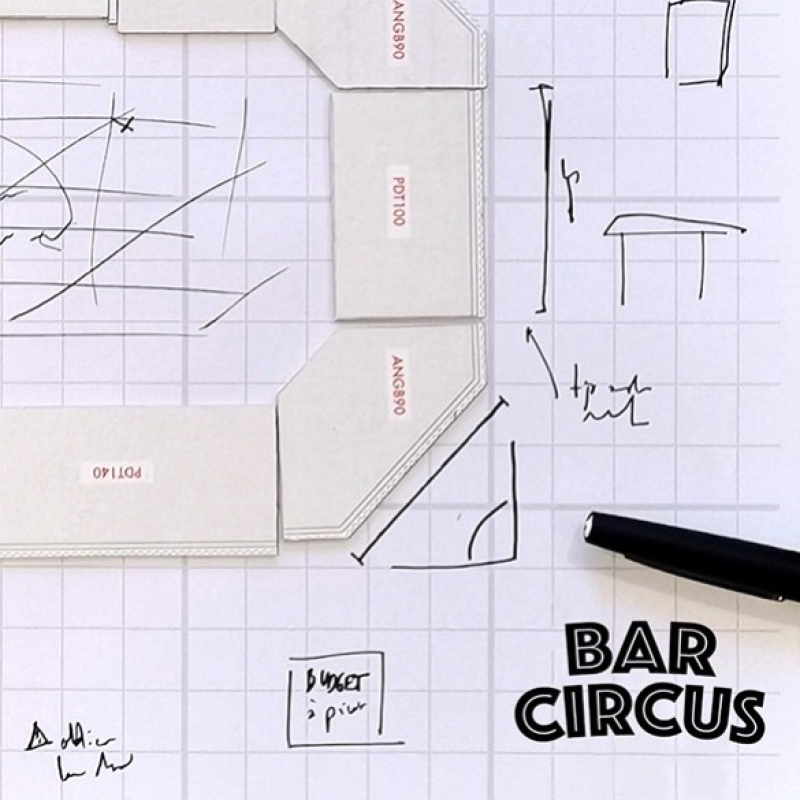
The design phase of the bar allows for the materialization of solutions to the programming issues into one or more visual, graphic proposals in the form of plans, prototypes, or 3D models.

The proposals from the bar design phase can be iterative based on constraints and objectives. Compromises may arise, and multiple scenarios can be considered. Often, iterations lead the project owner to revise part of their programming. This design work must therefore be regularly reviewed by the project owner until a satisfactory proposal is achieved. The structuring of the design phase is partitioned into stages ESQ, APS, APD, EXE, etc.

The Steps from Fabrication to Installation of the Stainless Steel Bar Counter

After approving the design of the stainless steel bar unit, the production phase begins. This major phase includes all the steps from fabrication to the final installation of the bar.

The production phase includes:

- Fabrication of the stainless steel bar.

- Delivery.

- Installation of the bar and connections (plumbing, electricity, and refrigerant fluids).

The fabrication phase includes:

- Drawing of the sheet metal furniture. This means adapting the execution plan into sheet metal plans that allow for workshop fabrication. The designer in charge of the operation interprets the received drawings into a fabrication drawing composed of sheets, tubes, and accessories, utilizing transformation techniques specific to the workshop and the broader boilermaker trade.

- The design plan is reviewed by a developer who issues the material cut lists and folding and assembly instructions.

- The entire set is sent to the cutting station, where tubes and flat sheets are cut to size.

- The cut pieces are processed by the bender who folds the sheets.

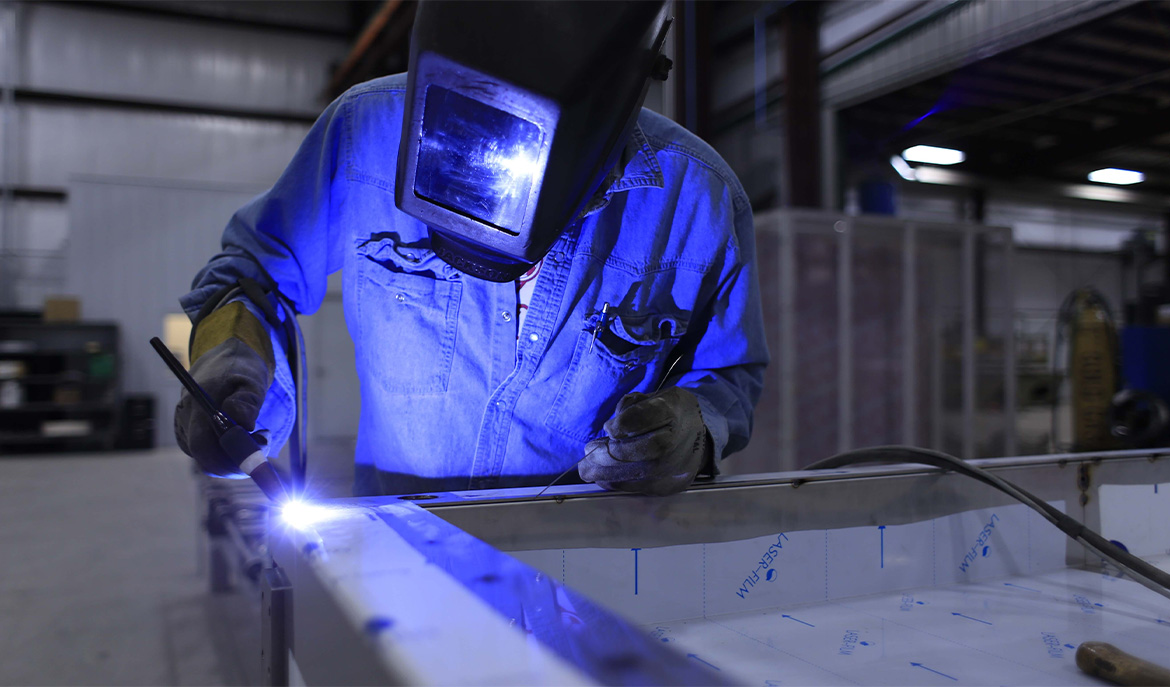
- The assembler's final role is to mechanically assemble or weld the different elements of the stainless steel bar. The assembler also handles surface finishes. Being one of the only manual operations in the fabrication process, their dexterity, experience, and talent give the piece its level of finish.

The installation of the bar includes:

- The placement of elements on site, assembly of elements by welding or metallic assembly.

- The installation of all accessories and equipment.

- The connection of electrical components.

- The plumbing connection of the bar.

- The connection of refrigerant fluids if needed.

- All connections require the intervention of qualified professionals with the necessary insurance.

Prior to the entry of the company installing the stainless steel bar furniture on site, some projects involve coordination with the CSPS (Health and Safety Coordinator) to ensure an installation with controlled risks. After the installation, the phases of DOE (executed work file) and DIUO (subsequent work intervention file) follow, allowing the project owner to facilitate the handling of equipment for maintenance and repairs.

After the bar is completed, the project owner receives the bar and prepares it for commissioning.

The reception of the stainless steel bar by the client

A crucial phase of transferring the bar and equipment between the installer and the user, the reception of the bar ensures the compliance and proper technical functioning of the entire setup. The site reception report and, if necessary, the safety sheets are issued during this phase.

At the end of the stainless steel bar project, drafting the report is the first step. This means validating the acceptance of the work by the client. At this stage, an inspection of the completed work allows for acceptance of the work with or without reservations. In large-scale projects, preliminary acceptance operations (OPR) by lots can be carried out to optimize the management of the site.

For the drafting of the site acceptance report for stainless steel bar furniture and their equipment, it is important to verify:

- The compliance of the executed stainless steel bar furniture compared to the validated bar plan: check the general dimensions, bar worktop heights, door opening directions, etc.

- The completeness of delivered accessories and equipment: check the installed mixers, gastronorm pans, grids, locks and keys, trash cans, etc. That is, all the elements that detach from the main bar body.

- The level of bar stations: ensure that all furniture respects the level, particularly on the bartender's worktop and the washing area. During the leveling stage, it is also important to check the proper drainage of water on the inclined worktops.

- The mechanics of bar stations: ensure that all furniture is properly on its foot supports, fixed to the floor, and that no element appears wobbly. Verify that shelves or any suspended component are solid and not mobile. Check the condition of the wheels on mobile modules. Verify the proper mechanics of doors and drawers, as well as the operation of locks.

- The surface appearance of bar stations: pay close attention to the absence of scratches, gaps, or other visual degradation. Examine that the edges of the stainless steel are properly deburred and do not present sharp sides.

- Electricity: some sites require a CONSUEL certificate, but this rarely concerns the bar since it mainly involves connections on already drawn lines and not a complete installation. Checking electricity at the bar means validating that everything is powered and all lines correspond to their respective circuit breakers. Verify that all circuits are well insulated and connected to the ground with the appropriate resistance. The insulation of cable outlets at the back of boxes should be surrounded by a sheath and insulating paste to ensure waterproofing. It is also necessary to check that all metal bar furniture is properly grounded.

- Plumbing: this involves conducting leak tests on water inlets by putting them under a pressure higher than the network by 3 bar. Ideally, 5 bar. For 24 to 48 hours to check for leaks from the connection to the general plumbing (usually on the waterproof concrete) to the tap. To verify anti-hammer devices, check their operation. For icewell type bins or drying grids, verify the drainage flow under the same conditions as operation to ensure proper water drainage. The hot or cold water supply is simple to check. Softened or sometimes osmosis-treated water for certain glass washers is less obvious to check. To confirm water compliance, a test is conducted using a Th tester or an installer can be called. Plumbing verification should also include health tests ensuring the backflow prevention devices on water inlets. To prevent any risk during operation, it is important to properly identify the networks and access to their shut-off valves.

- Equipment: the equipment verification is carried out by subjecting them to operating conditions identical to those during normal operation. The tests must confirm the start-up and shutdown of machines, the regulation, and the choice of modes and menus. All these start-ups must be checked against the results obtained from the machine. Any observations that seem abnormal must be noted.

Upon receiving the stainless steel bar, safety data sheets can also be issued. They describe important information and procedures in case of a problem to cut off the circuits.

The handover of the site is the ideal time to transmit the equipment sheets. Keeping the history of the equipment sheets is important for the entire operational period.

This allows to:

- Extend the lifespan of the equipment with regular maintenance tracking and their periodicity.

- In case of a breakdown, quickly access key information for repairs and enable the warranty to be enforced.

- Alert when an equipment no longer has a maintenance contract in effect.

There are many formats available, and we offer one below.

Commissioning of the Professional Bar and Its Equipment

Following the project handover and often carried out simultaneously, is the phase of commissioning the equipment and training the on-site staff.

The commissioning process involves making the bar operational as it should be during its operation. Since the bar is ready, it is often the ideal time for staff training. At this stage, everything the staff needs to know for daily use and maintenance must be communicated.

To speed up the information transfer and avoid omissions, simplified usage sheets can be created and made readily available. Depending on the space, the best display area is near the equipment, for example in a laminated sheet on the back of a door.

In case of an emergency breakdown, it is also important to keep the contact information of the equipment maintenance company on the equipment.

You may also be interested in these other tips