

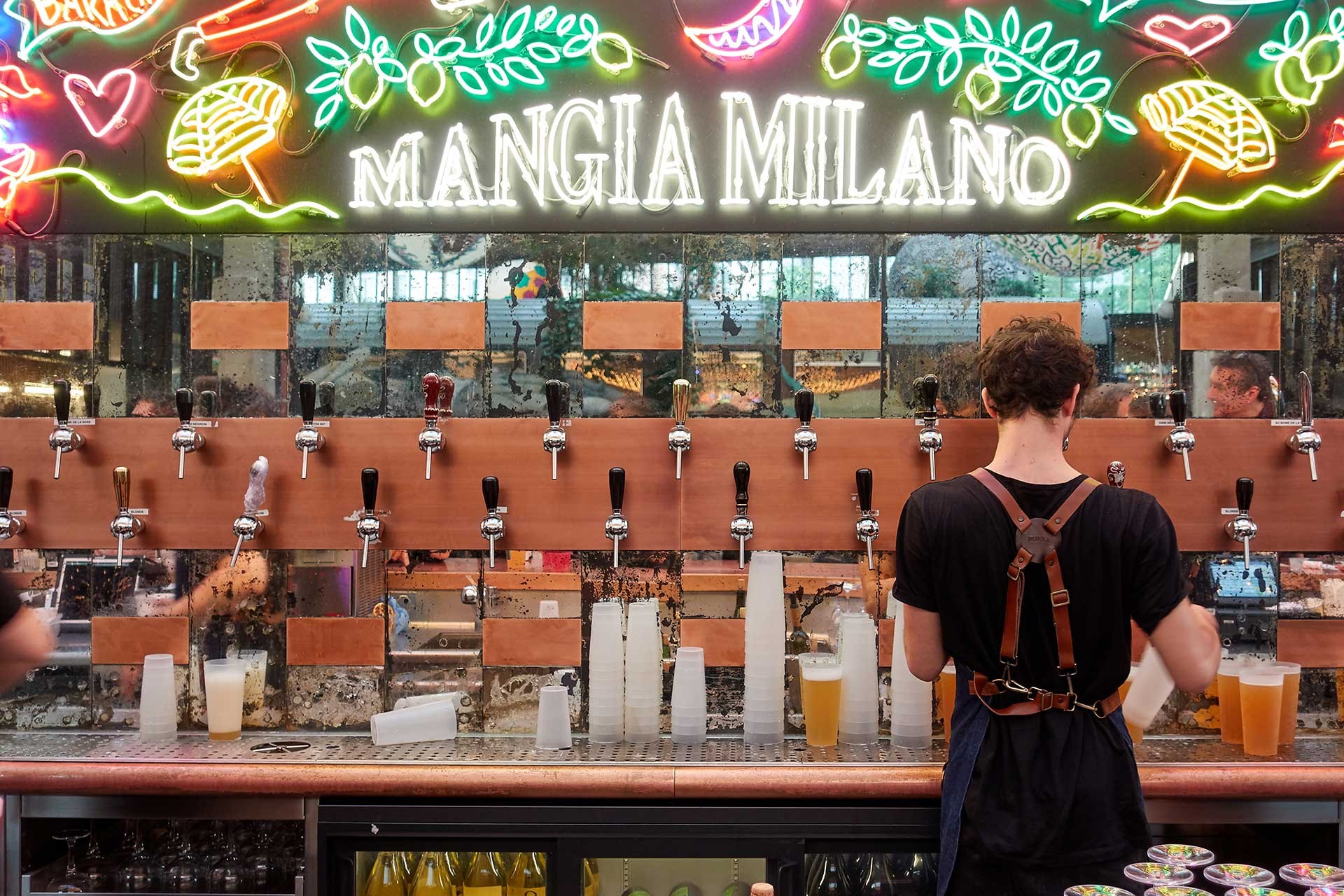
Here are the different ready-to-install Beer Wall system options.
1. Stand-alone Unit:
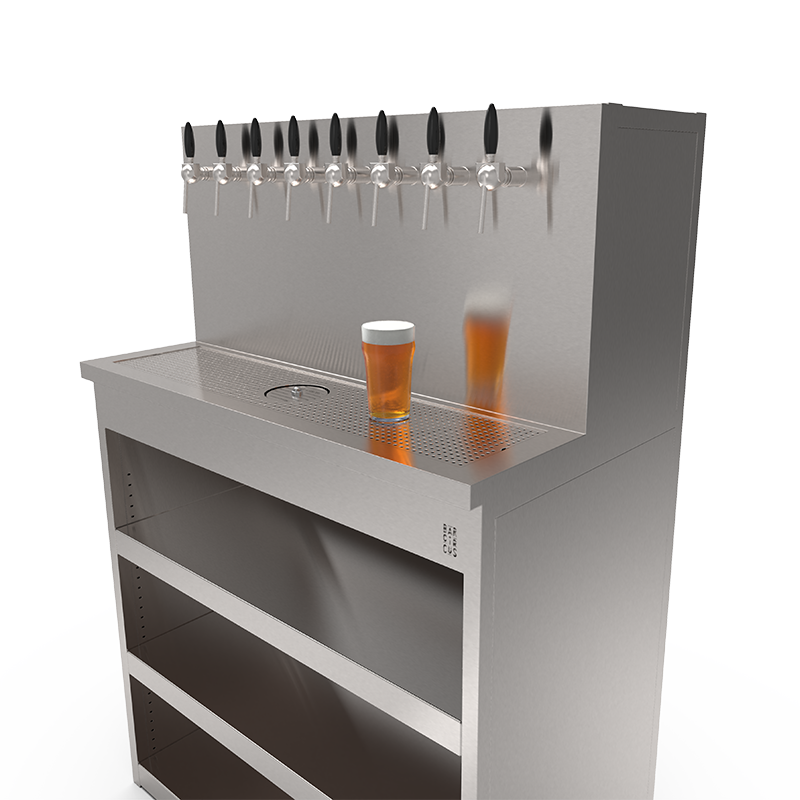
This is the simplest solution. It is a complete beer wall unit ready to be placed on the floor, with four legs. It includes shelves or a designated space to integrate a refrigeration system, a tray with a drip grid, and the Beer Wall itself with top access for maintenance.
2. Beer Wall Countertop Tray:
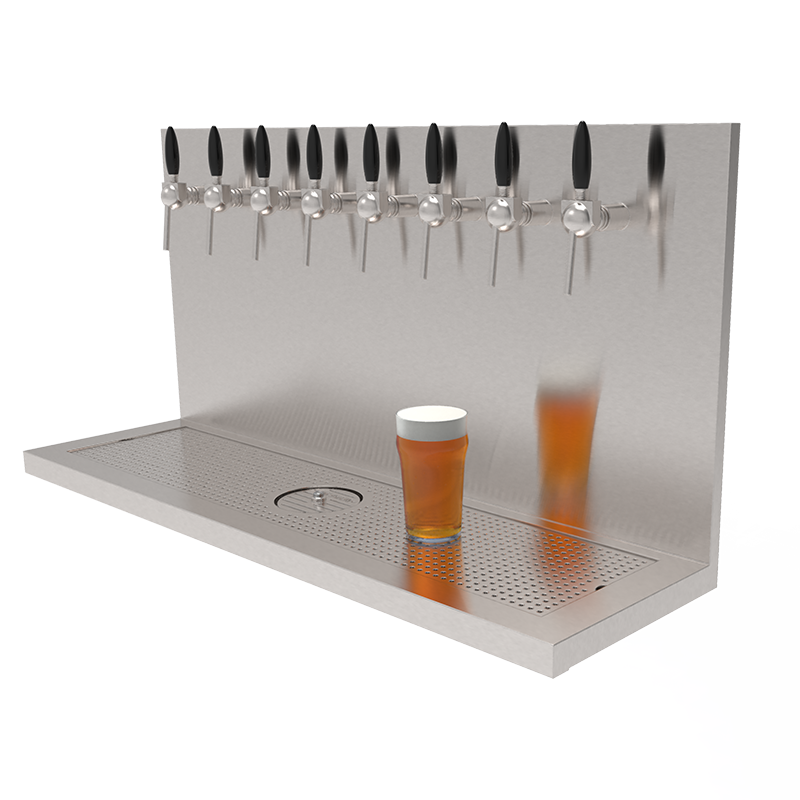
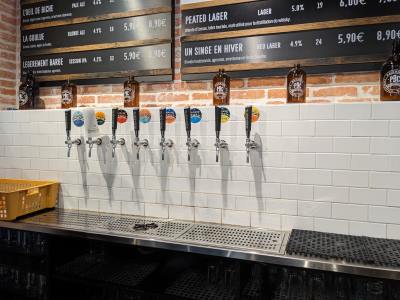
This is a beer drip tray to be placed on a counter, with a stainless steel riser to place beers. It is the most commonly used solution in establishments. The beer wall tray can be placed against a partition wall to pass the beer supply lines through.
3. Built-in Beer Wall Tray:
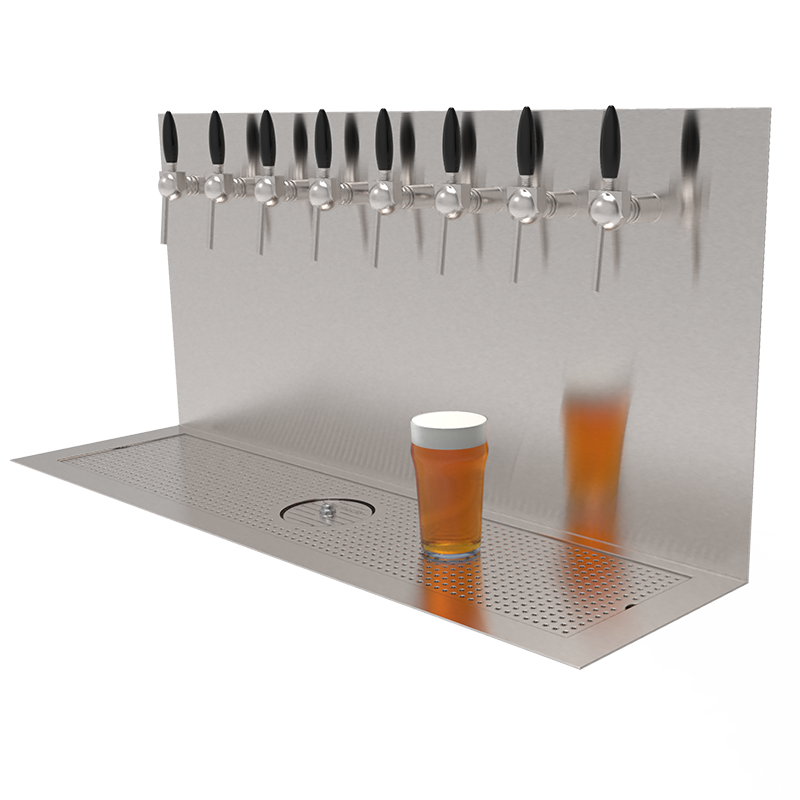
If embedding is possible, this solution is both aesthetic and economical. The built-in beer wall tray allows the counter and the wall it is backed against to be flush, for discreet integration.
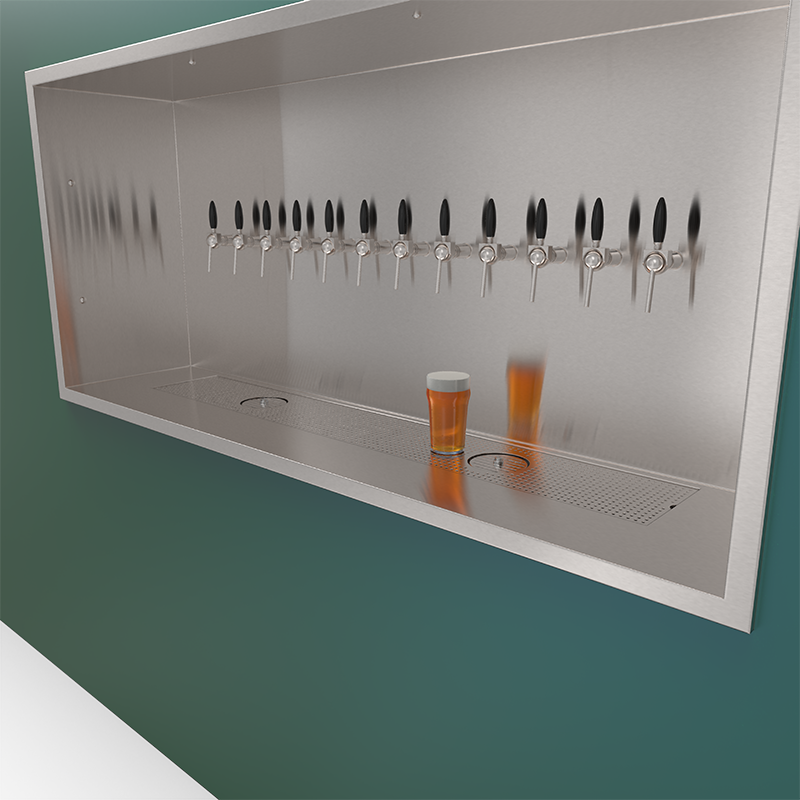
4. Beer Wall BOX for Wall Embedding:
Widely used when converting a container into a Beer Wall, but increasingly common in establishments, this beer wall box system allows for complete wall embedding, without the grid protruding from the facade. It is also very practical in confined spaces where it is necessary to reduce the bar's floor footprint.
5. Tap Wall Grids:
Traditional grids with glass rinsers. These are simple solutions to embed or place, positioned under the taps and installed directly on the wall.
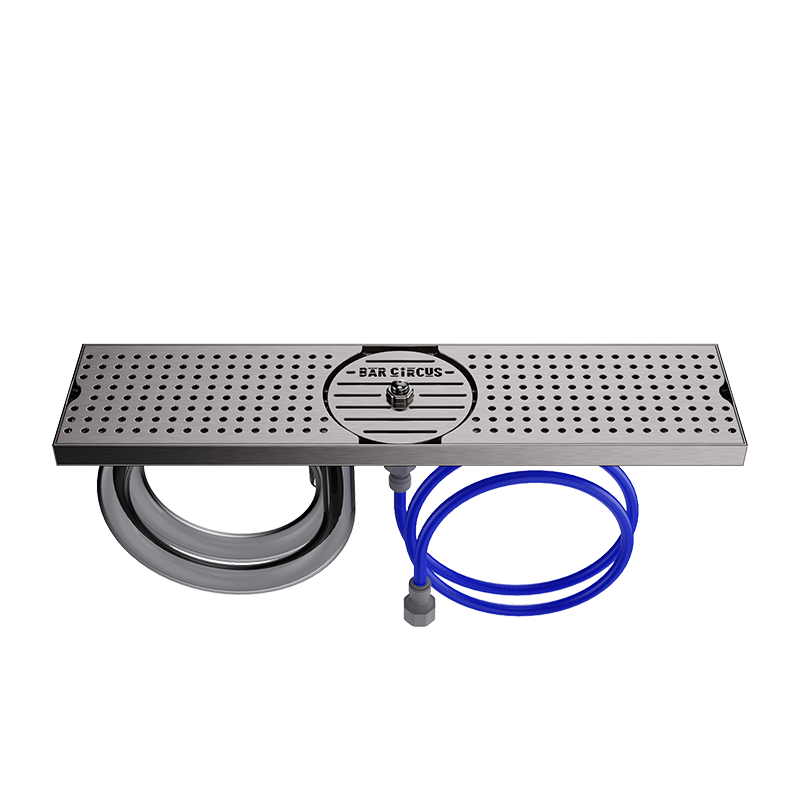
These different options offer varied choices depending on aesthetic needs, available space, and desired integration into the establishment.
The use of these Beer Walls can also vary from one establishment to another. While the most common solution is for beers to be poured by bartenders behind the counter, the self-service alternative is also perfectly feasible.
Some establishments opt for a self-service beer solution, often using prepaid cards so that customers can serve themselves.
In this type of system, a flow meter is usually integrated to accurately calculate the amount of beer served.
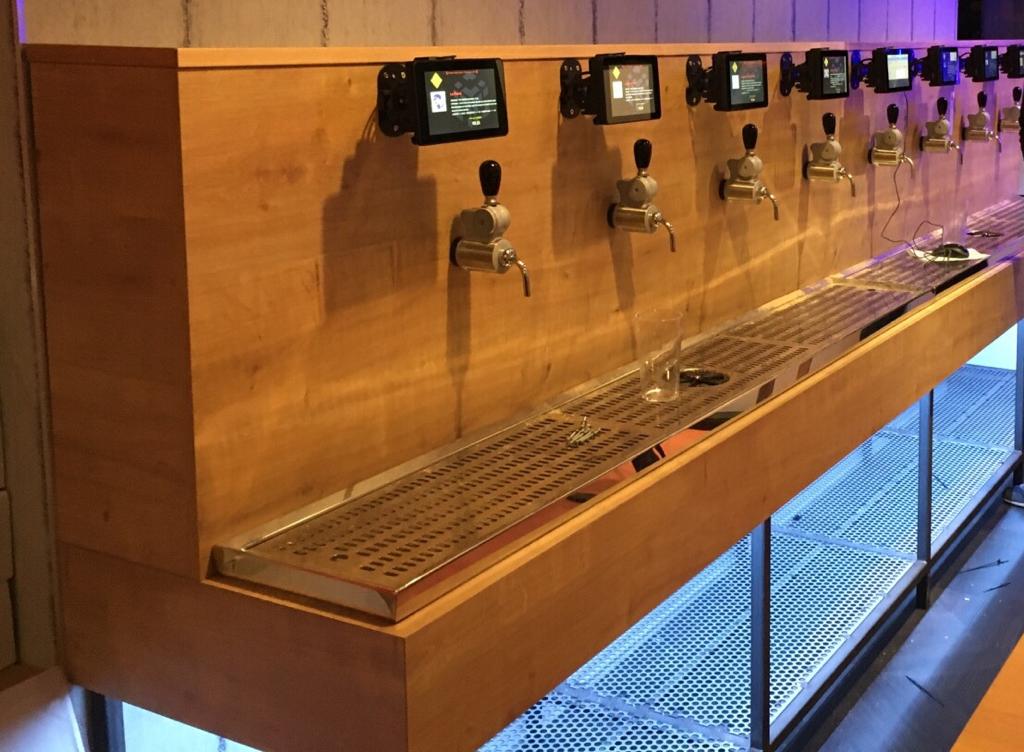
The card reader is very often located on the screen near the tap, although sometimes it can be positioned under the beer grid. The screen located above the tap primarily functions to inform customers about their credit and to provide the necessary information for them to serve themselves correctly. This solution is particularly interesting for establishments with high traffic and a loyal clientele or during festivals.
However, it is important to consider it with discernment, as maintaining the proper functioning of the equipment is essential, and customers must respect the equipment. Implementing a self-service system should be accompanied by special attention to the following points:
- Securing the equipment: As it is often away from the staff, the keg storage area must be locked to prevent unauthorized access.
- Reinforcement: Since it is a self-service system, there is a risk of damage and theft. It is preferable to opt for alternatives that cannot be easily detached or to glue the elements to enhance their stability.
- Practicality: It is important that the maintenance and cleaning of the Beer Wall are easy to perform and that the rotation of glasses is obvious to ensure smooth service. By taking these aspects into account, implementing a self-service system can offer a positive experience, but it is essential to take the necessary measures to ensure the security of the equipment and customer satisfaction.
Regarding the aesthetic aspect, all styles are achievable. Indeed, the technical part of the Beer Wall, although restrictive, allows the whole to blend into any decor, as stainless steel is quite visually neutral. It is even possible to imagine entirely custom-made sets, thus allowing for any kind of creativity. The stainless steel facade can be cleaned with a specific product for food-grade stainless steel, ensuring proper maintenance.
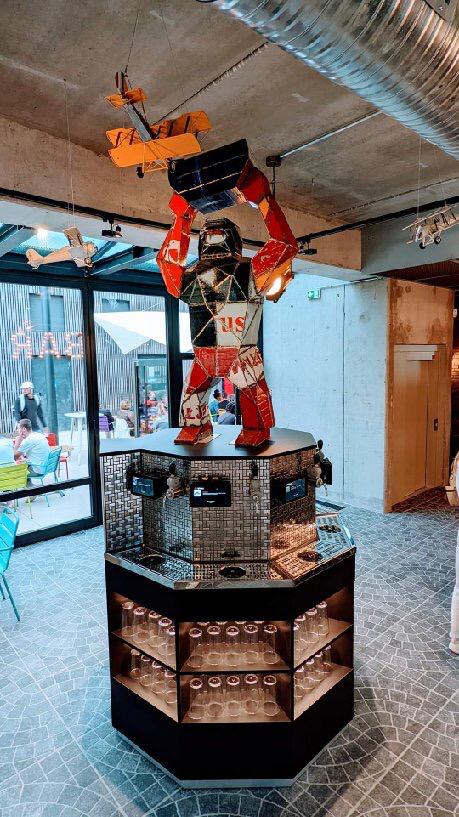
The Bar Circus team is available to assist you in the design and production of custom structures and furniture.
Technically, depending on the number of beer references and technical constraints, two main cooling methods can be implemented:
- Traditional cooling units use coils chilled by the ice bank to circulate the beer. However, increasing the number of taps can quickly lead to a significant increase in the number of required coolers. Another disadvantage of this solution is that once a keg is tapped, it is recommended to finish it within 7 days. It becomes clear that when the number of beer references increases, it can be difficult to finish certain kegs within these timeframes. The main advantage of this solution is that it allows for a classic installation of coolers in a minimally ventilated room, without major space constraints, apart from the storage of kegs, ice banks, and CO2 bottles.
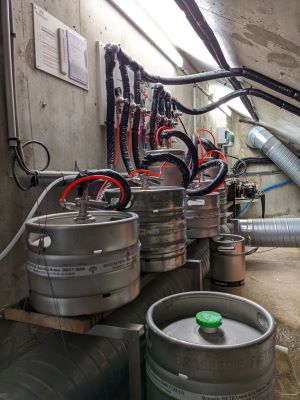
- The use of a cold room is another option. The idea is to build a cold room to store tapped kegs and those in stock, so there is no need for cooling units to chill each keg individually. This solution becomes very interesting when the number of taps becomes significant and the space allows for the construction of such a cold room. This method has an additional advantage: once the kegs are tapped, they can be stored for up to 14 days instead of the 7 days at room temperature. In cases where the cold room cannot be installed behind the draft wall, the installer adds a cooling unit that functions to refrigerate the python line between the cold room and the draft wall to keep the beer fresh at the tap.
Maintenance of a beer wall
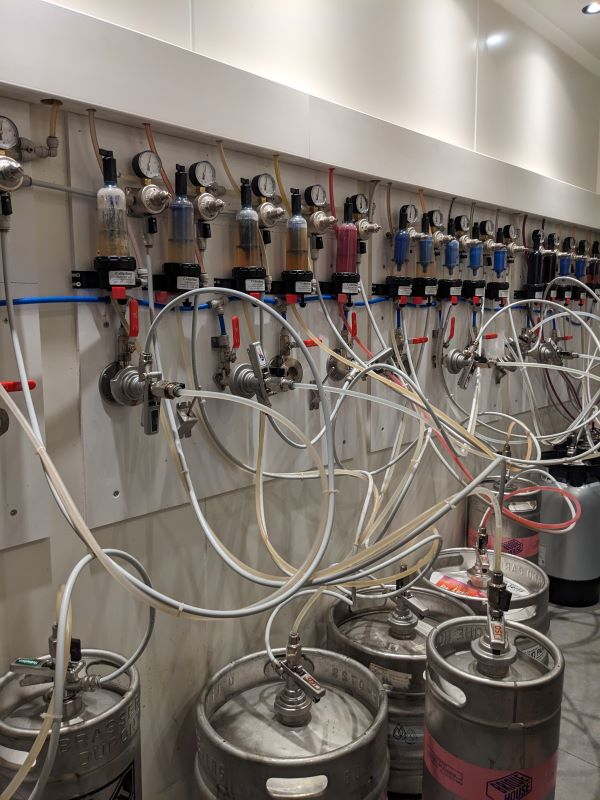
There is no major difference from a classic beer installation system, the only distinction is that the taps must remain accessible for any maintenance operation. It is therefore essential to ensure that the Beer Wall is accessible from the top or the back for the technician responsible for interventions.
If you install a Beer Wall, it indicates that you plan to serve larger volumes and selections of beer than in a typical establishment. There is a technical optimization point that can allow you to reduce your losses by up to 10%. This is particularly useful when the kegs are not positioned near the tap. Stock loss occurs when changing the keg. When a keg is nearing its end, foam begins to invade the tube connecting the keg to the distribution tap. The beer served at this time may be accompanied by "spits" of foam. To resolve this issue and simplify keg changes, there is a system that detects the first traces of foam coming from the keg.
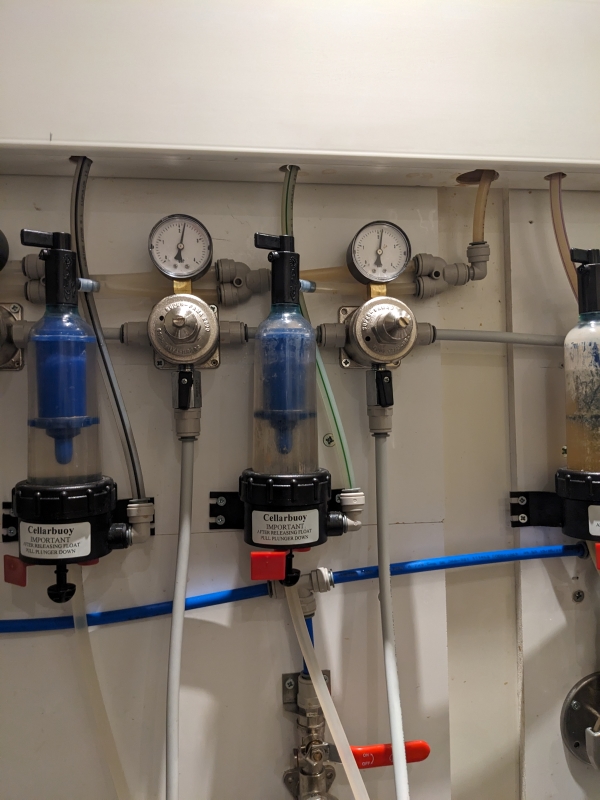
This system comes in several variants called “keg end detectors,” “foam stop,” or by any other name. Once the keg is changed, it is no longer necessary to purge the tube to remove all the CO2. Thus, no stock loss is to be noted. These devices are available in mechanical or electronic versions.
By using this solution, you can optimize your stock management and minimize losses related to keg changes, thereby improving your profitability.